
PART 1
Why we want a buyer.
In this first part I open the map, pick one zip code, and talk through why I want a buyer in the first place. Then I start wide in Harris County and work my way toward the zip, so I know whether the area is even alive. By the end of Part 1 I have a random address to build the search around.
Pick the zip code first.
Open SiftMap from the dashboard sidebar.
We're going be operating inside a zip map here. So the first move is to leave the dashboard and get into the map itself.
Everything in this lesson happens on that map, so open it before you go looking for the deal.
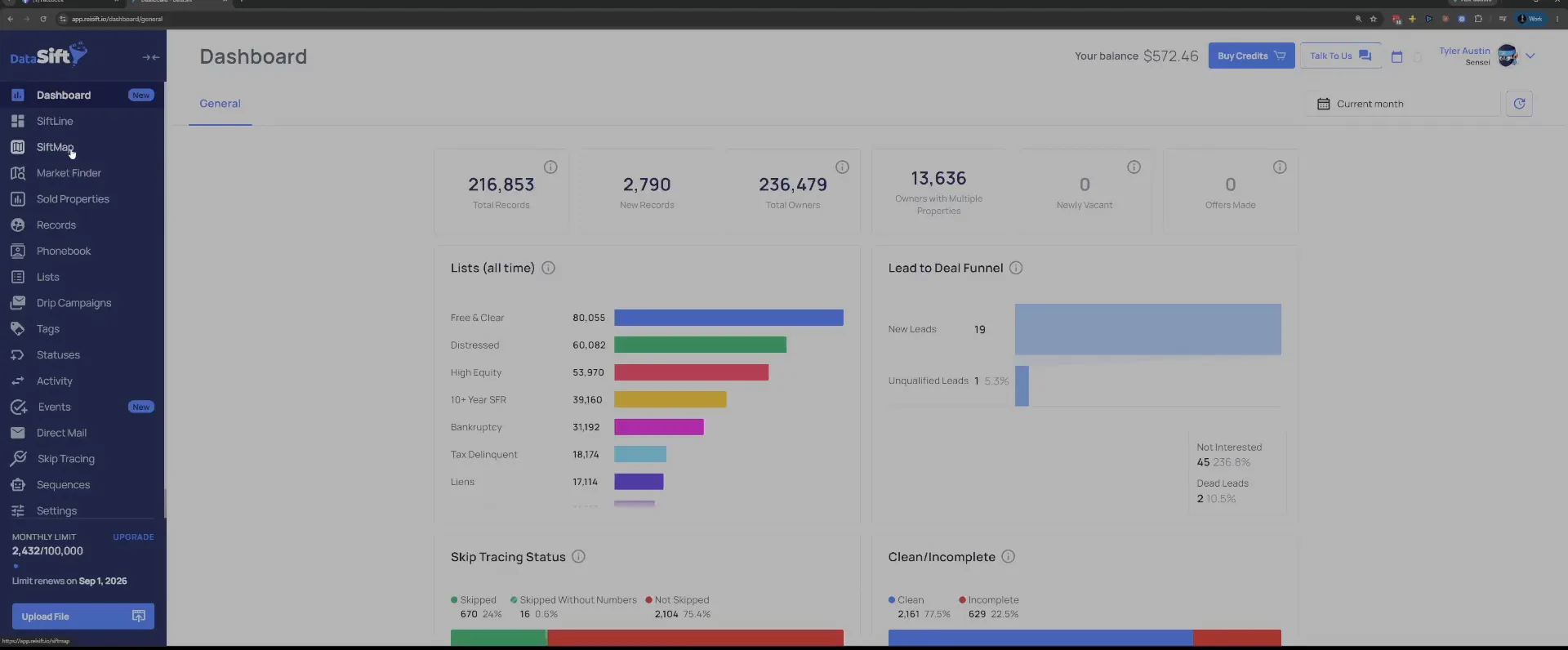
Search 77080 from the empty map view.
The map sits there with nothing on it until you give it a zip code. I open up my phone, go to that post I had earlier, and look at a zip code. The first one I see is Houston, 77080, so let's do that one. Houston is Harris County, so that is the county I will be working in.
Before I search, let's start off by just thinking about what it is and why we want a buyer. A lot of times when we're thinking buyers, we're just thinking I need somebody to sell my deal to. That is reactionary, because you're not playing a proactive game.
What I really want is someone who fits a certain criteria and buys in a certain area. Someone with a certain amount of liquidity, who I can build a relationship with. What you're never going to be able to do through data is find someone you can truly trust. Data doesn't mean trustworthy.
And we can use data to kind of find some of that information for us without having to guess, if you will.
Don't abuse your relationships.
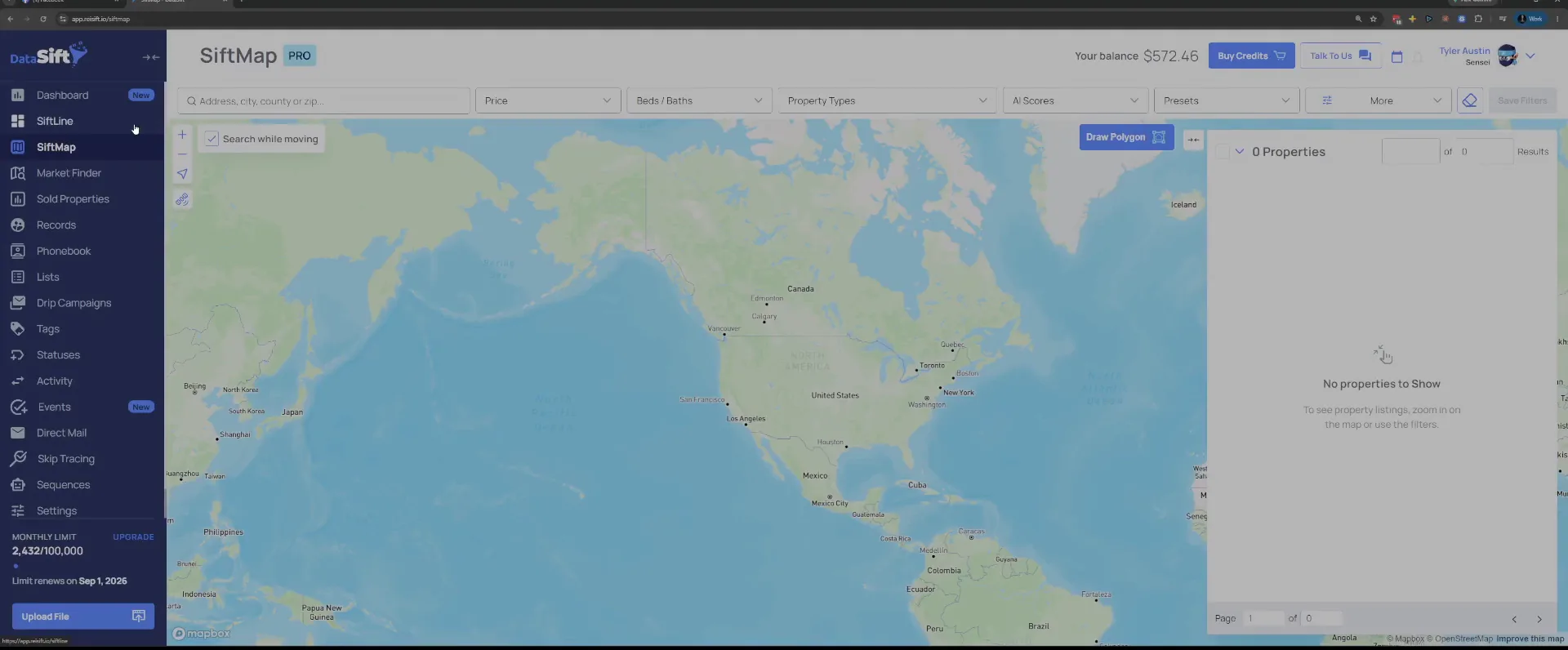
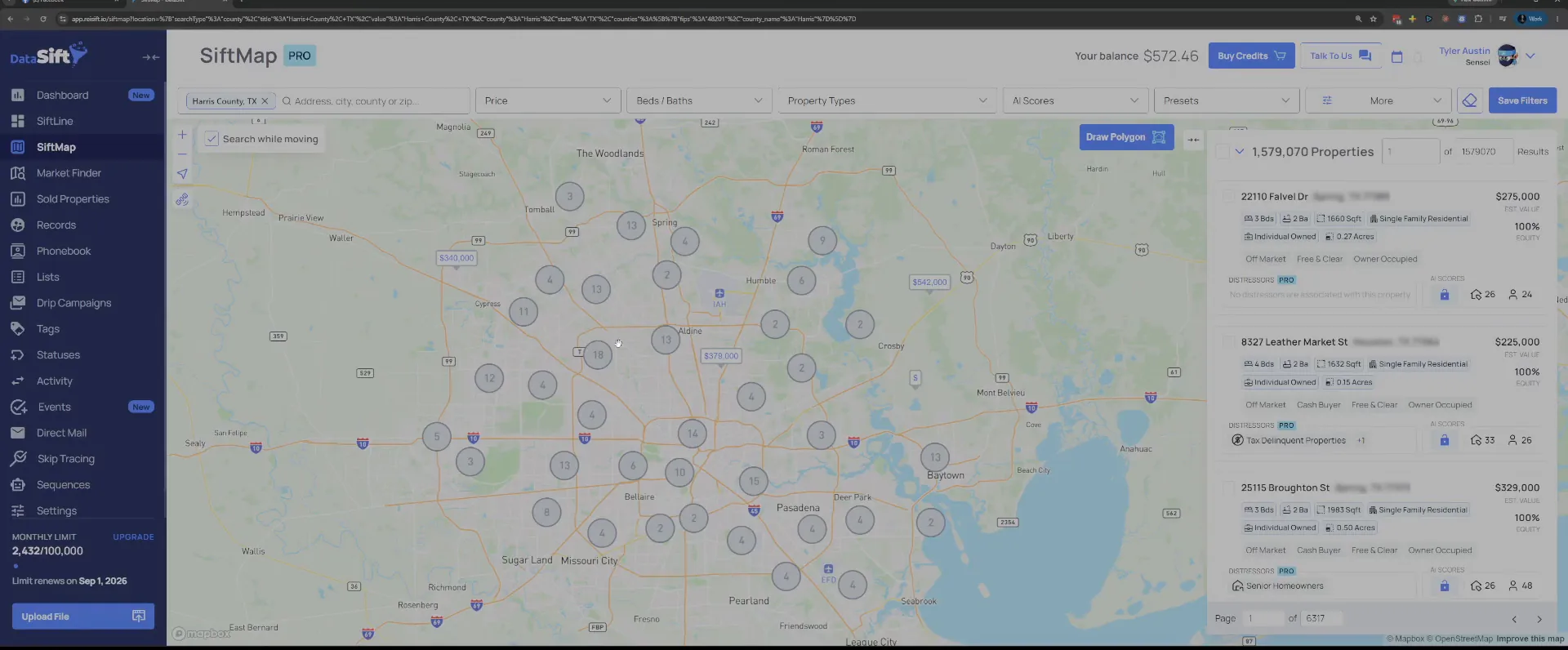
Open Harris County on the map with the results panel.
This is where I start. I like to start at the county level, then go down to the neighborhood I'm in. I get a lay of the land and figure out how many pending investor transactions are there first. If there are none, I'm probably in a dead area and wasting my time.
I'm not saying don't try to sell your deals for as much as you can. I'm just saying don't abuse your relationships, because good relationships are what this business is all about. Don't squeeze an extra $5 or $10 out of somebody you have already made a lot of money from. They will start finding deals from somebody else.
Say a buyer took on more risk and had a $30,000 surprise on a deal you sold them. Hook them up on the next one.
If you don't try to remedy that in some form of fashion, on the next deal, hook them up, then you're going to burn your relationship.
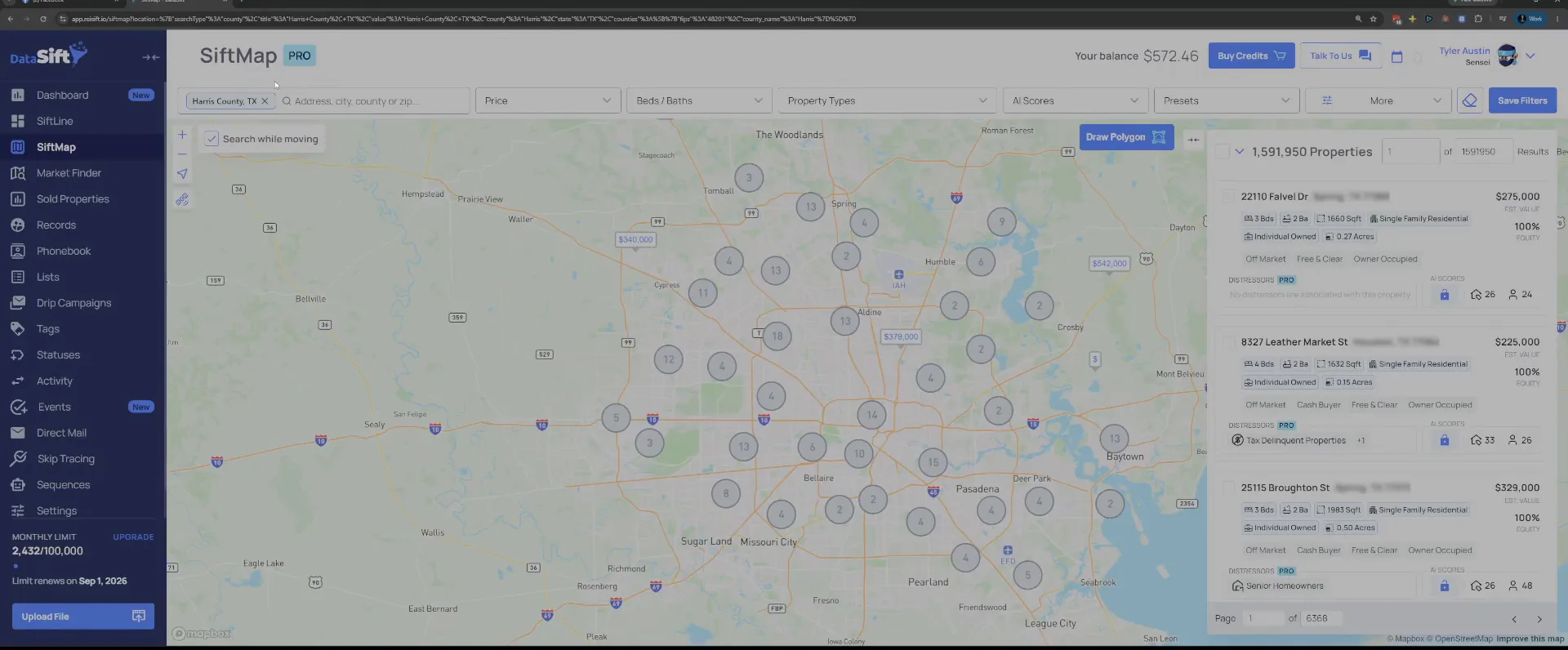
Zoom out to the county wide view once.
The clusters cover the whole county and the results list fills up with properties. County wide you have a ton of records, a lot of properties, a lot of investments, a lot of stuff going on.
So I wouldn't go out to the county level unless you really needed to. I stay at the neighborhood level, then the zip code level, and only then the county. In something like Harris County you should have no problem finding buyers at the zip code level.
There are people flipping properties up in Katy who are not flipping in the southeast side of Houston. It is such a far distance across that you can stay in Katy and never have to leave.
Search levels
Start at the neighborhood, then widen out.
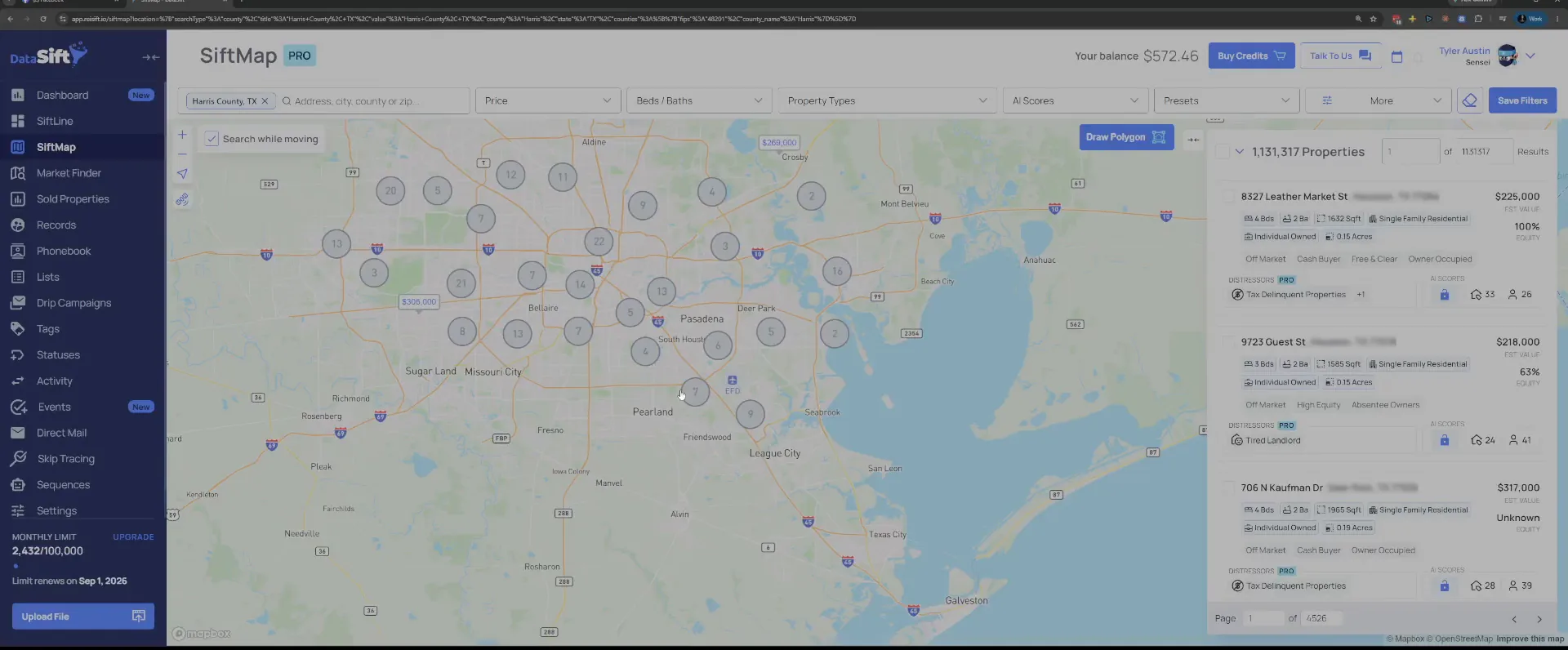
Read how far the markers spread before going wider.
We're in one of the largest metro markets in The United States, so take that in consideration. But say I'm in somewhere like Pinellas County. Pretty much anybody buying and flipping houses there will buy anything in Pinellas County, as long as the numbers make sense.
Go wider here and you might start getting resistance. They say that's all the way over in Katy, and their crews are down on the southeast side with other projects. It costs them more money to get up there. The better the deal is, the less you have to worry about that.
Also know who you are going for. A buy and hold investor shows up as someone holding a portfolio, and at 7% interest rates they almost need better deals than flippers do.
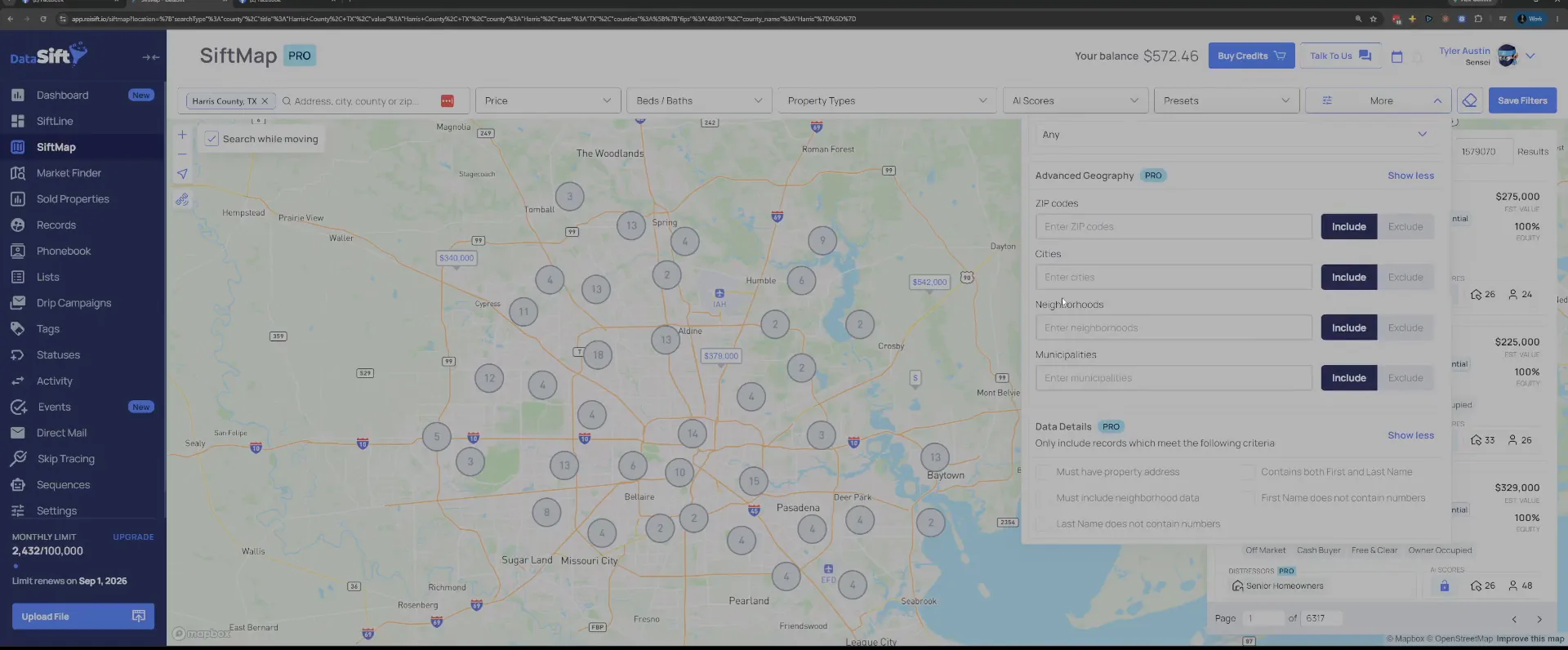
Open Advanced Geography and type the zip code in ZIP codes.
The panel opens with ZIP codes, cities and neighborhoods all empty. I'm searching the zip code because I don't have an address yet, and I'm doing this ahead of time.
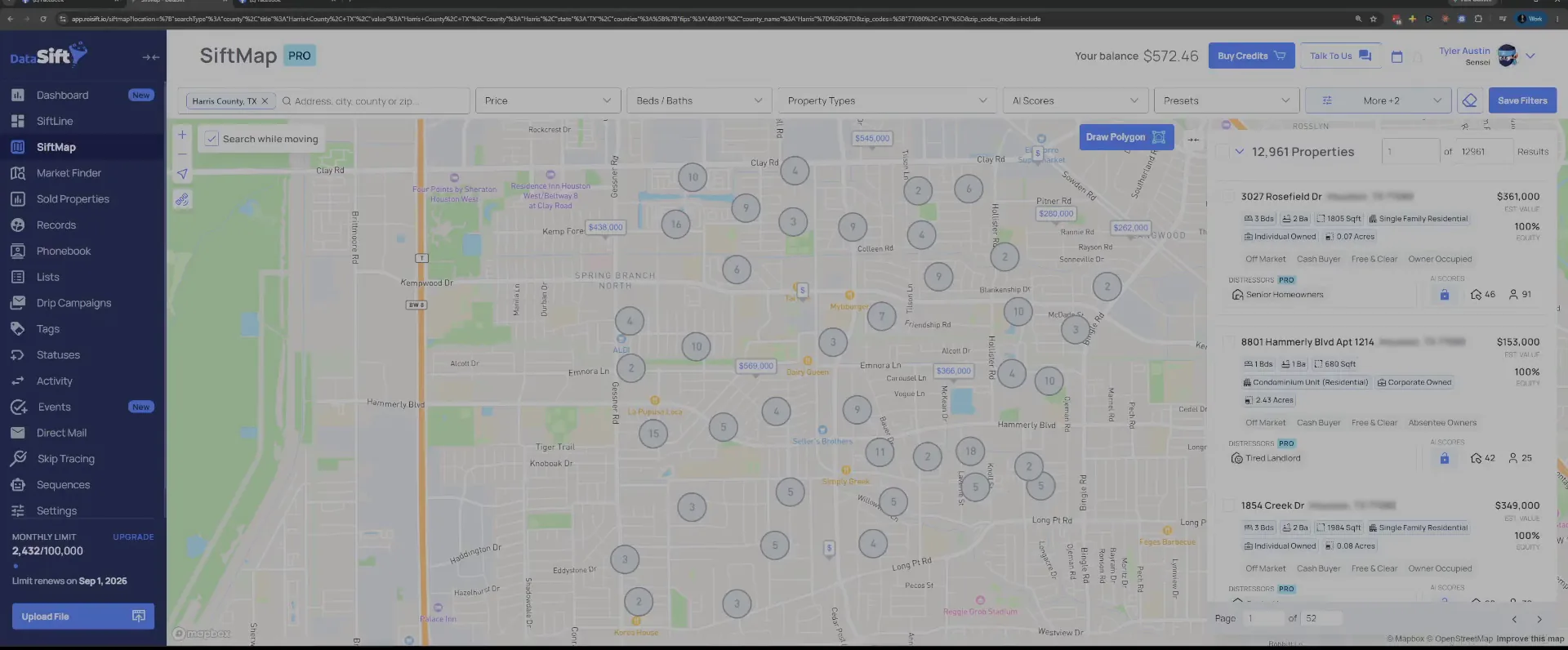
Grab one random address from the results list.
The search brings back the properties in that zip, and I can see it's a pretty decent sized zip code. I'm just going to grab this address right here.
That address stands in for the deal I have under contract. It gives me the neighborhood to work from before I widen out.
BEFORE YOU MOVE ON