
PART 1
Call review and the one fix.
I hear a lot that VA sucks or my callers suck. Most of the time the problem is training, and call review is the fix. This is the workflow we run weekly on real recordings.
Call review is the biggest lever.
Review real calls instead of blaming your callers.
I hear a lot that VA sucks or my callers suck. The sad truth is that most of the time you suck at training. Call review is a good step to improve that.
One of the biggest levers you can pull on the sales side is call review. Most people cannot hire a sales manager yet, so the owner does the trainings. The people I see succeed without a sales manager are doing founder led sales.
Most people do not have the ability to hire a sales manager because it's kind of a later stage game sort of deal.
Open the coaching and performance breakdown workflow.
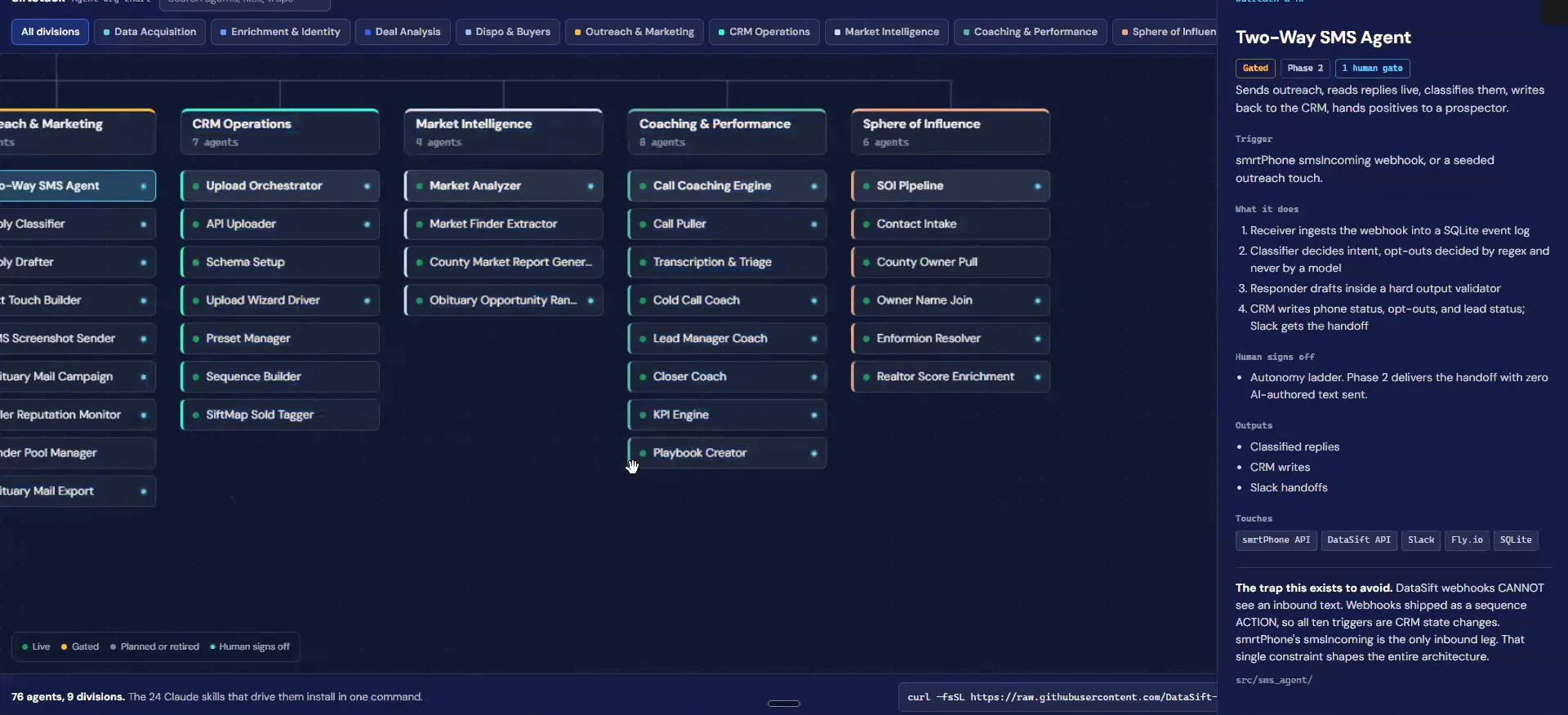
Inside SiftStack there is a workflow for the coaching and performance breakdown. It breaks down the closer coach, the lead manager coach, and the cold calling coach. It works for smartphone, and you can ask SiftStack to adjust it.
Set up Slack automations on top of it. You can run this daily or weekly. Right now we run it weekly.
Pull the longer calls and grade them automatically.
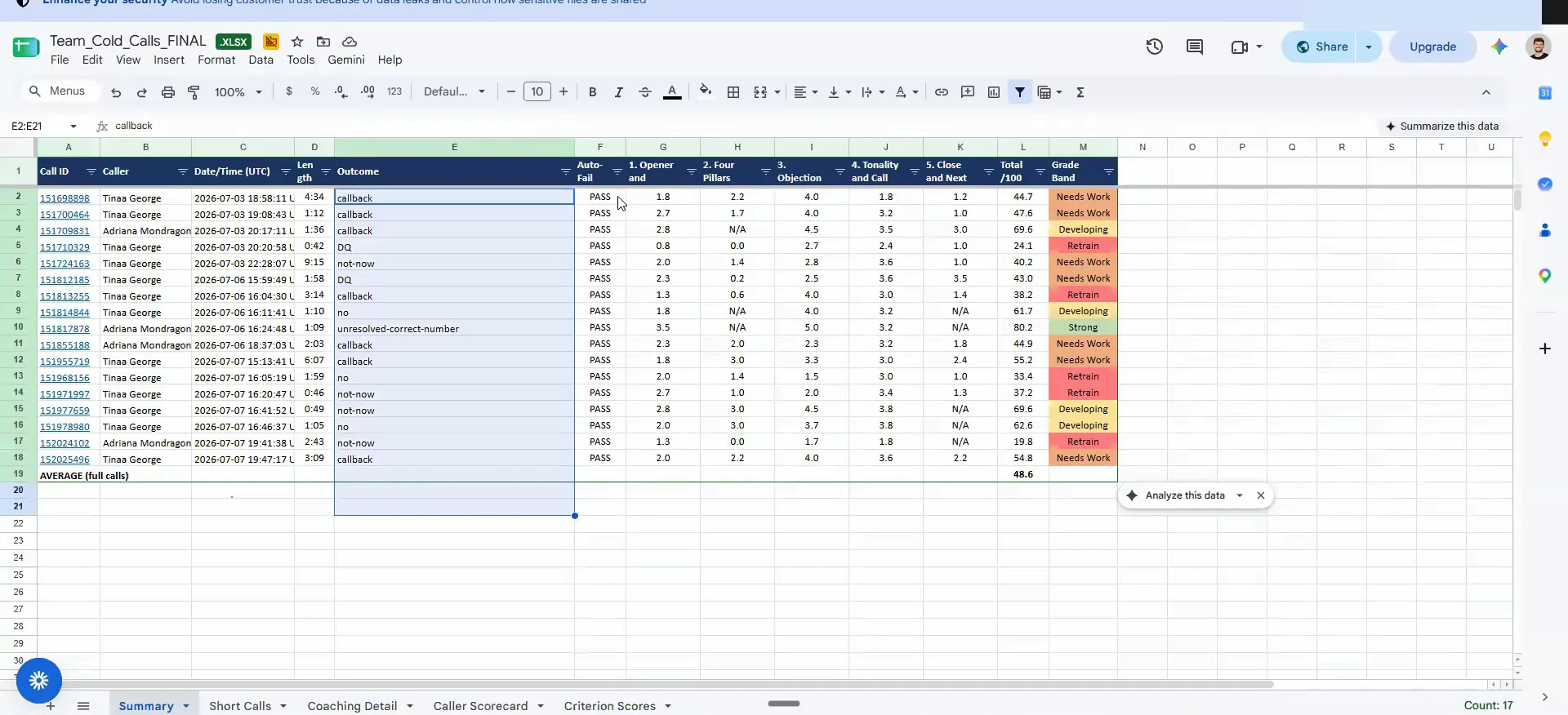
We pull all of the calls that are longer. The automation grabs the recordings straight from Sift with the actual recordings from smartphone. It tells you who the caller is, the length of the call, and the outcome.
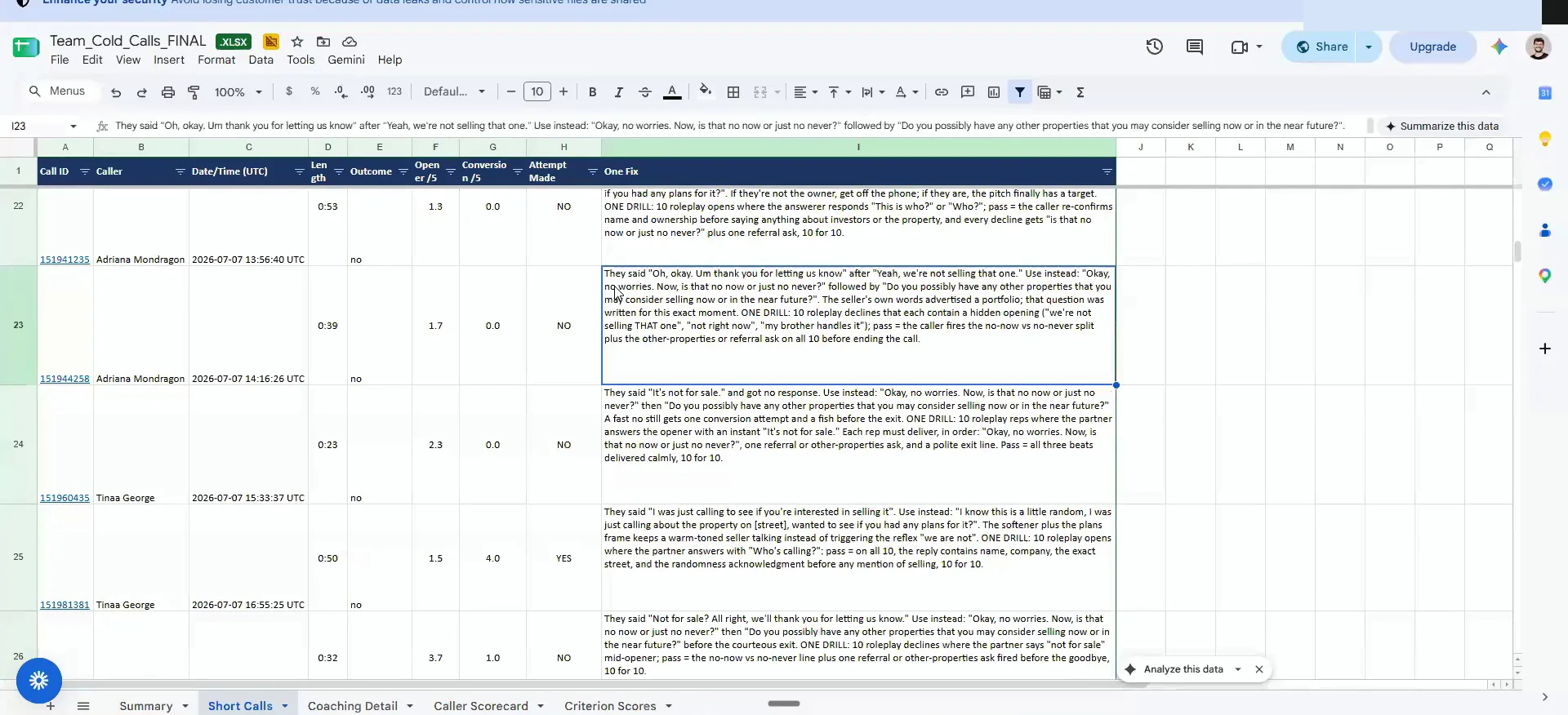
Then it ranks everything from the four pillars, the opener, objections that came up, tonality, and the next steps. It gives the one fix for each call, plus detailed coaching that gets sent to the individuals. We also grab the two best and the two worst from the week and meet with them on it.
The people we just hired for the doors per deal framework got success fast because we were training them on every single call. If you have done sales training by hand, you know how long that takes. You spend the time just deciding which calls to listen to.
Call review
The weekly call review runs in six steps.
- 1Pull the longer callsStart with the calls that ran long, not every call on the board.
- 2Pull the recordingsThe automation grabs the actual recordings straight from Sift.
- 3Caller, length, outcomeYou see who the caller is, the length of that call, and the outcome of it.
- 4Rank the four pillarsIt ranks the opener, the objections that came up, tonality, and the next steps.
- 5Break down the one fixEach call gets one fix plus detailed coaching sent to that person.
- 6Meet on best and worstGrab the two best and the two worst from the week and meet with them on it.
One big thing to fix.
Take one fix or one reinforcement per call.
We found that taking one big thing to fix from each call, or one thing to reinforce, is the best way to do this. Keep in mind your people do not know real estate unless you hired a veteran.
One of them told me the person was not really interested in selling, and Zillow showed it was not for sale. We had to say that is not how this works at all. We do not want to see it for sale on Zillow, because this is off market. We probably had not explained that well, so we reinforced it.
Another one called an obituary record that was not flagged. The caller heard it was a sibling who inherited the property and did not bother asking about selling. That is actually a huge opportunity, so we showed how to handle it next time.
And we found that taking one big thing to fix from each of the calls or one thing to reinforce is the best way to do this.
Use the transcribed quotes in your training.
From there it gets into the tactical stuff. They pushed back on you asking for a price, so here is how you handle the price objection. If someone says they will sell for the right price, they are really not that motivated.
It gives quotes that are transcribed from the calls. That is a super big hack for training in general.
Set the cadence by how new the caller is.
You can do this daily if you have the time, or weekly. At a very minimum, do one call a week with your team where you hand review a few of these.
For the first week in any new role, whether that is management, cold calling, or closing, I would do it every single day. I cannot think of a better training resource than listening to every call and giving feedback on all of them.
After that it is really just repetition. You could stretch it from the first three days all the way to the first two weeks. It depends on your use case.
I think you could expand that out to maybe the first three days all the way to the first two weeks if you have the time.
Review cadence
How new the caller is sets the cadence.
- 1First week in the roleFor the first week of prospecting in any new role, I would do it every single day.
- 2Expand it if you have timeYou could expand that out to maybe the first three days all the way to the first two weeks.
- 3Once the process is nailedAfter they have the whole process nailed, it is really just repetition.
- 4Minimum with your teamAt a very minimum, do one call a week where you hand review a few of these calls.
Questions on the calling framework.
Score your own calls the same way.
This also works really well if you are doing the calling yourself. You can score your own calls and understand the mistakes you are making from an objective perspective.
Simon asked if there is a skill for this. It is all inside the agent framework from the beginning. It is the call coaching engine paired with the cold call coach, lead manager coach, and closer coach.
Nelson asked about transcribing. AssemblyAI is one, and the other tool I am going to show you next.
Touch up the notes yourself before you automate sending.
Shadi asked whether I read the notes and give the feedback, or just send the notes over. Get it rolling where it sends to you first. You touch it up and then send the perfected version.
If you change anything, have Claude read your changes and update the claude.md file the way I have been showing. Once it is consistent, you can send it to them automatically every day.
And if you change anything, have Claude read your changes and then update the claude.md file the way I've kind of been showing to the challenge.
Hire on w two, except door knockers.
Monet asked how we process the people we hire. In the US they are on w two, unless they are a door knocker. That one is more of a legal reason.
There is a lot of legal risk of them getting injured while door knocking, so it is safer to go the ten ninety nine route. Everything else is w two. All overseas people have to be a ten ninety nine.
Hiring w two
In The US it is w two, unless they are a door knocker, and that is more of a legal reason. All overseas people have to be a ten ninety nine.
BEFORE YOU MOVE ON