
PART 1
One script, many frames.
The question was whether I hand my caller a probate script and a separate foreclosure script. I do not. There is one script, and the frame around it changes with the list.
The question I got asked.
Run every list off one script with a different frame.
The question was simple. Do you actually personalize things by the actual distress or vexation. Calling foreclosures versus probates versus obituaries, is there a different script for each one.
My answer is one script for most of it. What changes is what I expect the person on the other end to say.
And do you actually personalize things by the actual distress or vexation?
Where I do split the workflow.
Split your workflow for foreclosure and for death related records.
We do this for very specific kinds of workflows, foreclosure and obituary death related. We categorize obituary and probate in that same bucket.
It is not necessarily so the script gets adjusted. It is because of who picks up. On an obituary record you reach a relative, and they say that was actually my dad or my parent.
Expect a relative on obituary and probate calls.
We know that is going to be a totally normal thing, because it is on an obituary or probate record. So the caller is not caught off guard by it.
When they are calling through that list, it is much easier to be in the frame of reaching out to relatives, not the owner.
So when they're calling through that, it's much easier to be in the frame of reaching out to relatives here, not the owner.
Two frames
Foreclosure and obituary calls are not the same.
Foreclosure
- Who you reachThe owner
- How they respondProbably angry
- Sales cycleGet out to help them sooner
- What you help withHelp them now
Obituary and probate
- Who you reachRelatives, not the owner
- How they respondA totally normal thing
- Sales cycleLonger sales cycle
- What you help withTake them through the probate process
Move fast on foreclosure and slow on obituary.
If we reach a foreclosure, we know they are probably going to be angry. They are probably getting a lot of calls too. The sooner we can get out to help them, the better.
Obituary runs the other way. That one has a longer sales cycle. We will probably help take them through the probate process, and that takes time.
BEFORE YOU MOVE ON
PART 2
The script will be the same.
Part one got us to the opener. Now I want to show you what we actually say on that first call, and how we check the calls afterward. Then we tie the whole month of numbers back to the lists you pulled.
We leave the script open ended.
Call just to ask about plans for the property.
So the script in that case is, there is no thing that we are saying. We do that to keep it simple on the calling team. They are just calling to see if they have any plans for that property.
You can tell a lot by the way the person responded. One of them said they had not even gone to the probate process yet. That was them answering the plan piece.
So the script in that case is, like there's no, thing that we're saying, and we do that to keep it simple on the calling team.
The script
They're just calling to see if they have any plans for that property, and we leave that open ended for them.
Listen to every call and retrain the ones that need it.
The script will be the same for everybody. How they take them through the process and have that context is what helps them guide it. We leave that open ended for them.
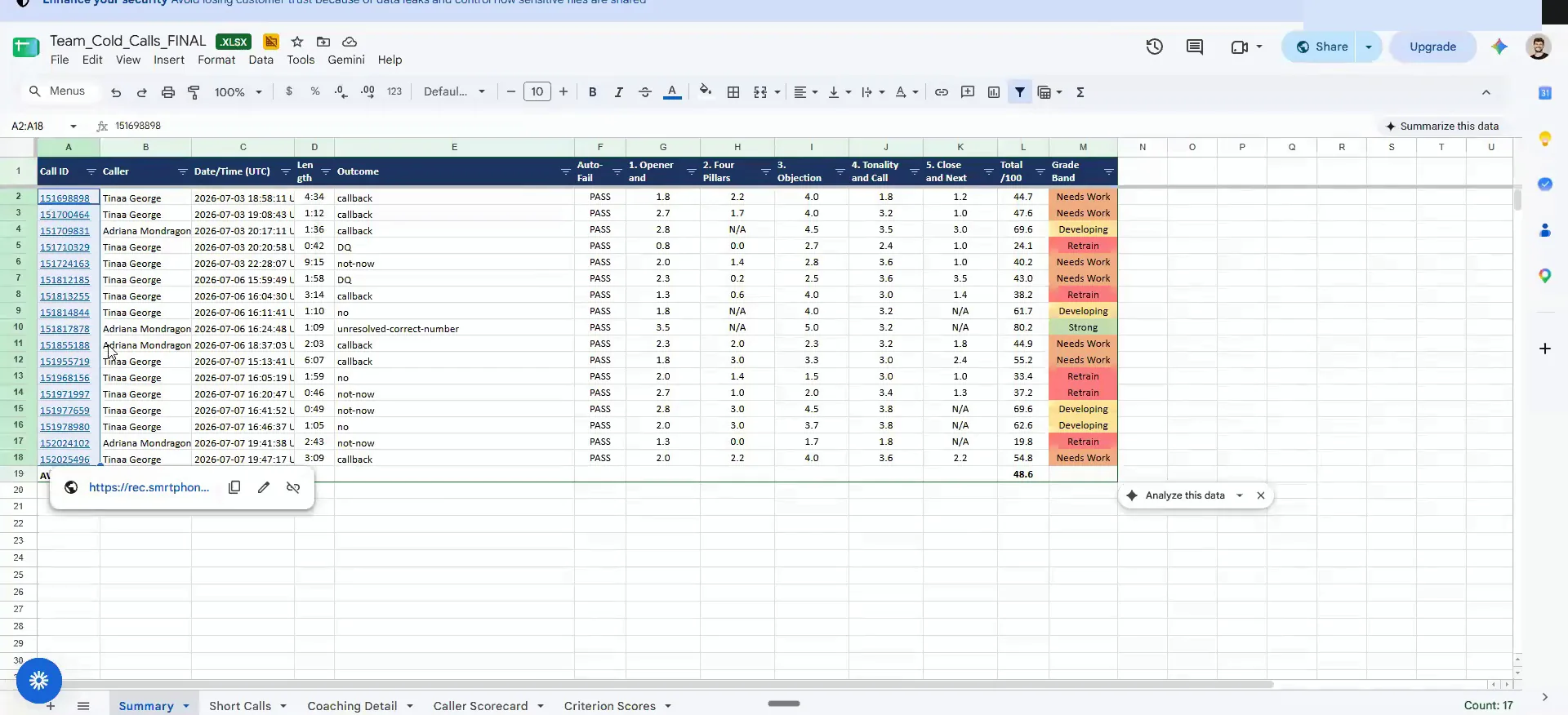
On the training side, we actually listen to all the calls, what Claude does. Then we go back through and listen to the ones that need retraining. We form fit it. You probably could have approached that better, and here is why.
Only count a correct number when they say not interested.
We will only commit a correct number if they said they are not interested in selling. If someone just swears at us and hangs up, we do not count it. That could easily be another person who is getting blasted and is not the real owner.
Here is how that happens. You get a lot of angry people who have nothing to do with the property. They ask why they keep getting these calls, because they show up on a skip trace record. They really could have nothing going on that has to do with the property.
Confirmed on both channels.
Call back the ambiguous ones to confirm the owner.
Look at the confirmed on both channels line. Those ones were a little bit ambiguous. They probably could have been the right owner, but they did not explicitly say they are not interested in selling.
So we go back through and call those people. That is why it has 39 on confirmed on both channels. We actually talked to them on the phone.
Read dials per correct number as text and call together.
I was getting asked about this. The 21 correct numbers came from actually calling. Dials per correct number, 13.5, is how the blended text and call actually looks.
And that is a really important metric, especially when you look at the amount of unique right party contacts.
Tie your right party contacts back to the lists.
Say there are 261 people we got in front of in a month. We know this is their information from a correct number perspective. Now that we are finally on day five, we can tie this together.
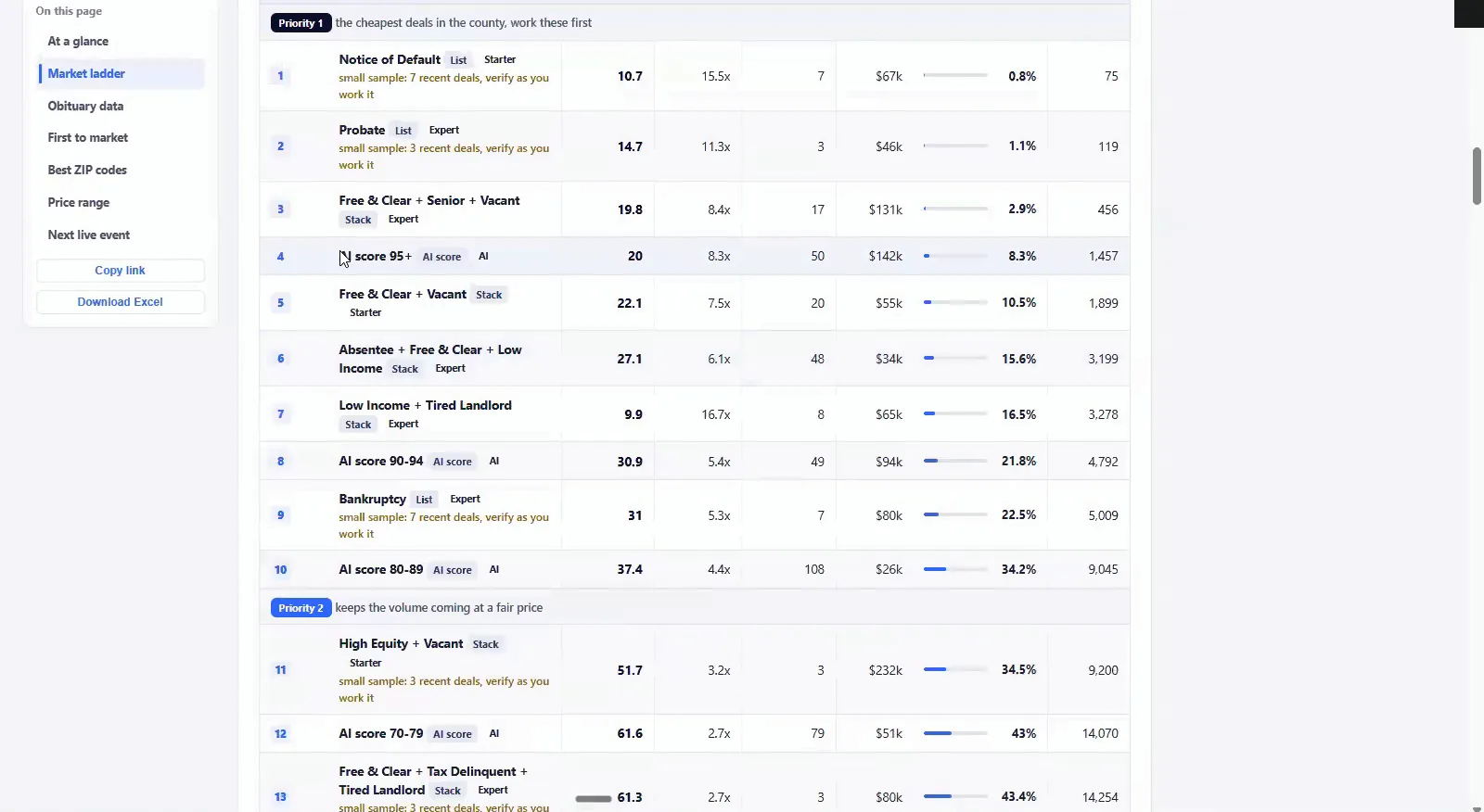
When we do AI score of 95 plus, free and clear senior vacant, probate, notice of default, we know what happens. About every 20 of that 261 right party contacts is going to sell in the next six months. That is a massive deal.
If we do our follow-up right, we have a good amount of deals in the pipeline. This is one of the key fundamental cornerstones of consistency over a long period of time. Now we have all that tracked, and that is where the non interested campaigns come in.
BEFORE YOU MOVE ON