
PART 1
What the carriers see on your numbers.
Number Verifier shows you what an AT&T, T-Mobile or Verizon phone shows when your number calls it. I found it after my contact rate fell off a cliff and I went hunting for the reason. This Part covers the tool, the pool your numbers come from, and the spam scores behind them.
Protect your numbers like an asset.
Treat every phone number as an asset to protect.
I think this is one of the massive unlocks that come with the entire challenge. It has everything to do with managing the reputation of your actual phone numbers preemptively.
You go through the Trestle process and score all your phone numbers based on activity. Then you use Number Verifier to keep those numbers as healthy as possible.
So this is one of my favorite lessons.
Number Verifier and what it costs.
Sign up for Number Verifier and plan the setup.
This is a site called Number Verifier. They are a little pricey, and they are a direct competitor to call reputation ID. These companies are explicitly designed to keep your phones from going to spam. The cost is around $10 per phone number.
They are hard to set up, because you have to book a sales call to work with them. After that it usually takes about two days to get on their platform.
They do year long contracts, but if you sign up and within ninety days you hate the product, you can just cancel it.
Know the pool your new numbers come from.
Whenever you go to buy a number, it is being pulled from a large pool of phone numbers. Smartphone, SmarterContact, Kixie, ReadyMode, all these dialing companies are pretty much pulling from that same pool.
Their platform taught me a lot about how this infrastructure is set up. They run cloud infrastructure dedicated phone lines for AT&T, T-Mobile and Verizon.
And more than likely, when you go in to buy a phone number, it's already in a terrible spot because it's been managed by...
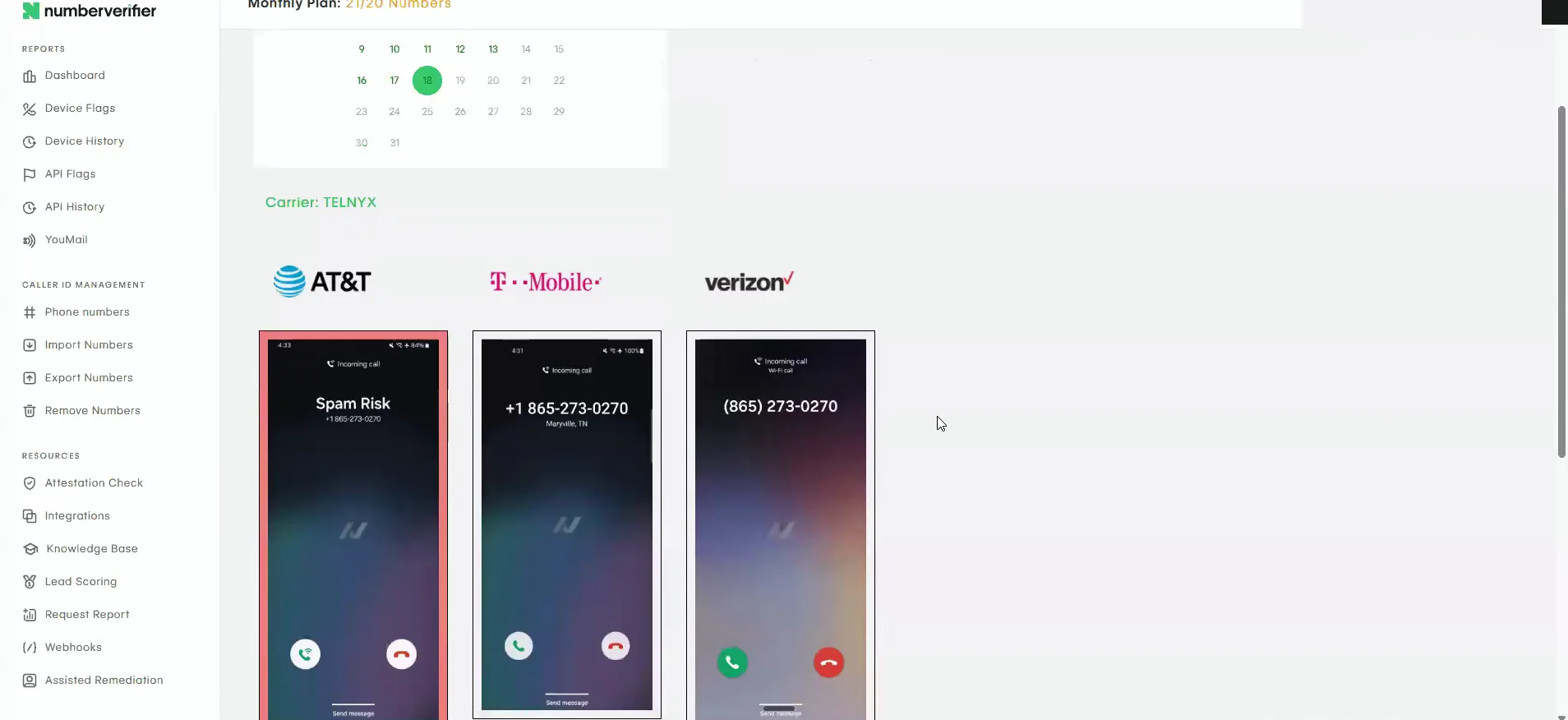
This number is labeled as spam risk.
Upload your numbers and read each carrier line.
You upload all your numbers, and these are all of mine. They dial outbound with AT&T, T-Mobile and Verizon using the numbers you just uploaded.
So this actually shows you what the end seller is seeing when you call them. Right now this number is labeled as spam risk under AT&T, but it is fine on T-Mobile and Verizon. I did not even know this existed, just to be real with you guys.
And what they do is they will actually dial outbound with AT and T, T Mobile, and Verizon using the phone numbers that you just uploaded.
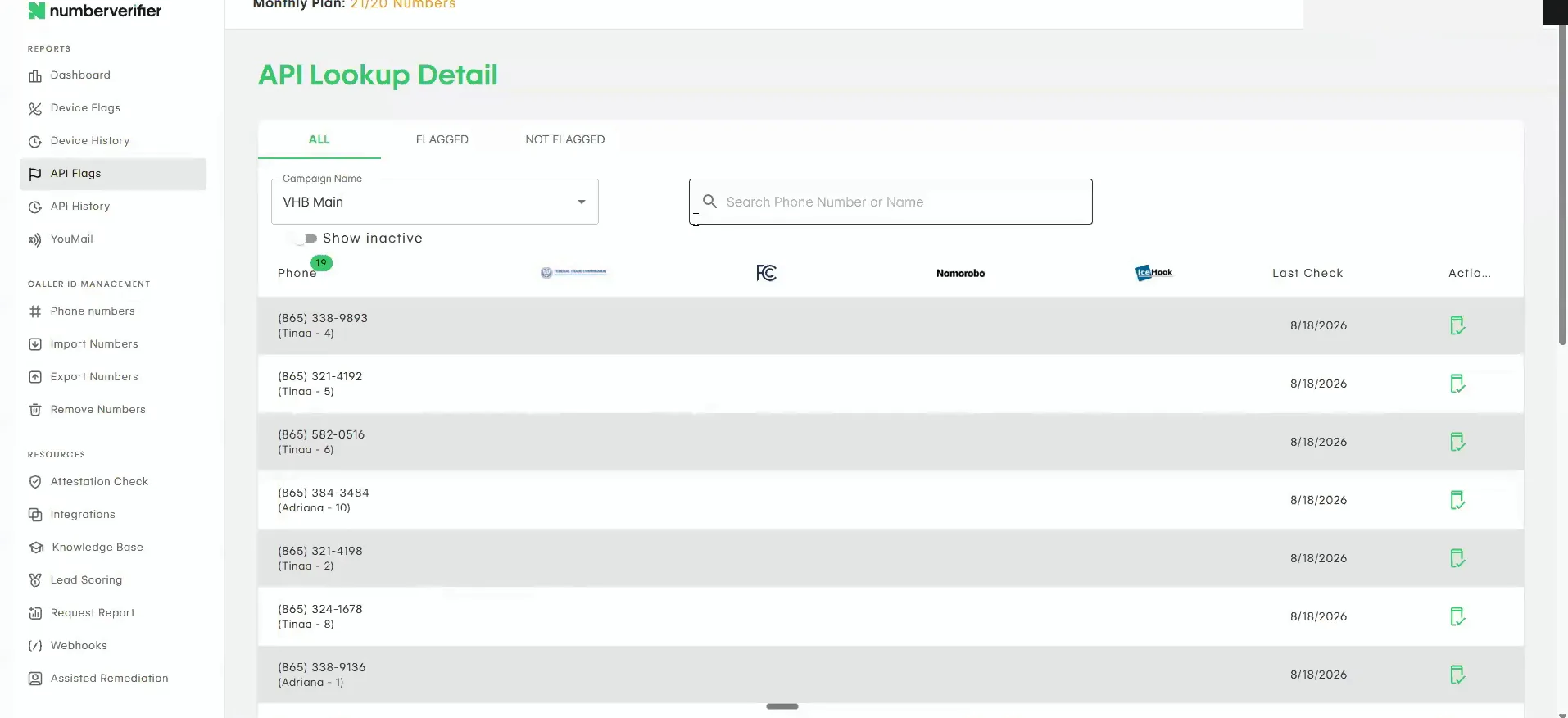
Open the API lookup detail and read the scores.
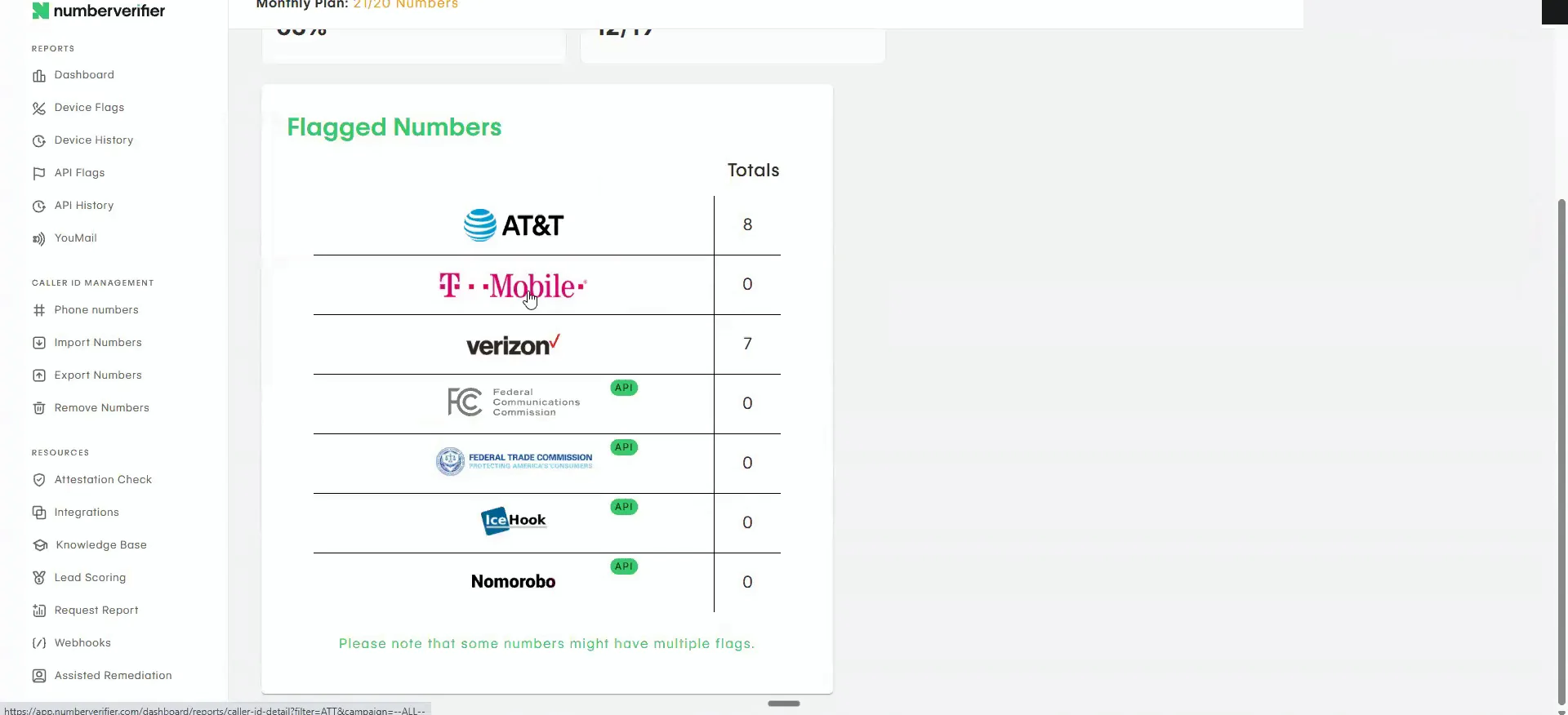
There are services that tell the carriers the odds that a number is being used for spam or outbound dialing. Two of them are maintained by the FTC, so those are complaints filed against the number you just purchased.
The other ones are Icehook and Niboro. These are essentially saying zero to 100, I think. I believe 70 and above is where these get marked as spam.
Drop any brand new number that comes in flagged.
I went and bought new phone numbers from smartphone. Every one of them came in brand new off the block and they were all marked spam. Some of those numbers had FTC complaints against them from previous companies using them for outbound.
Number Verifier came to me and said it plain. Anytime these API lookup details are spamming your numbers, they will never ever be usable, so just drop them. That alone was earth shattering to me.
BEFORE YOU MOVE ON
PART 2
What the carriers show, day by day.
I thought numbers came cooled and cleaned when you bought them. They do not. This part is what I found when I started checking the carriers myself, what the remediation does, and where the numbers actually come from.
Purchased numbers are not cleaned.
Open device history and read the green and red marks.
I guess I thought that when numbers were purchased that they had been cooled and cleaned. That is not the case at all. So that was a huge myth that was kinda broken for me.
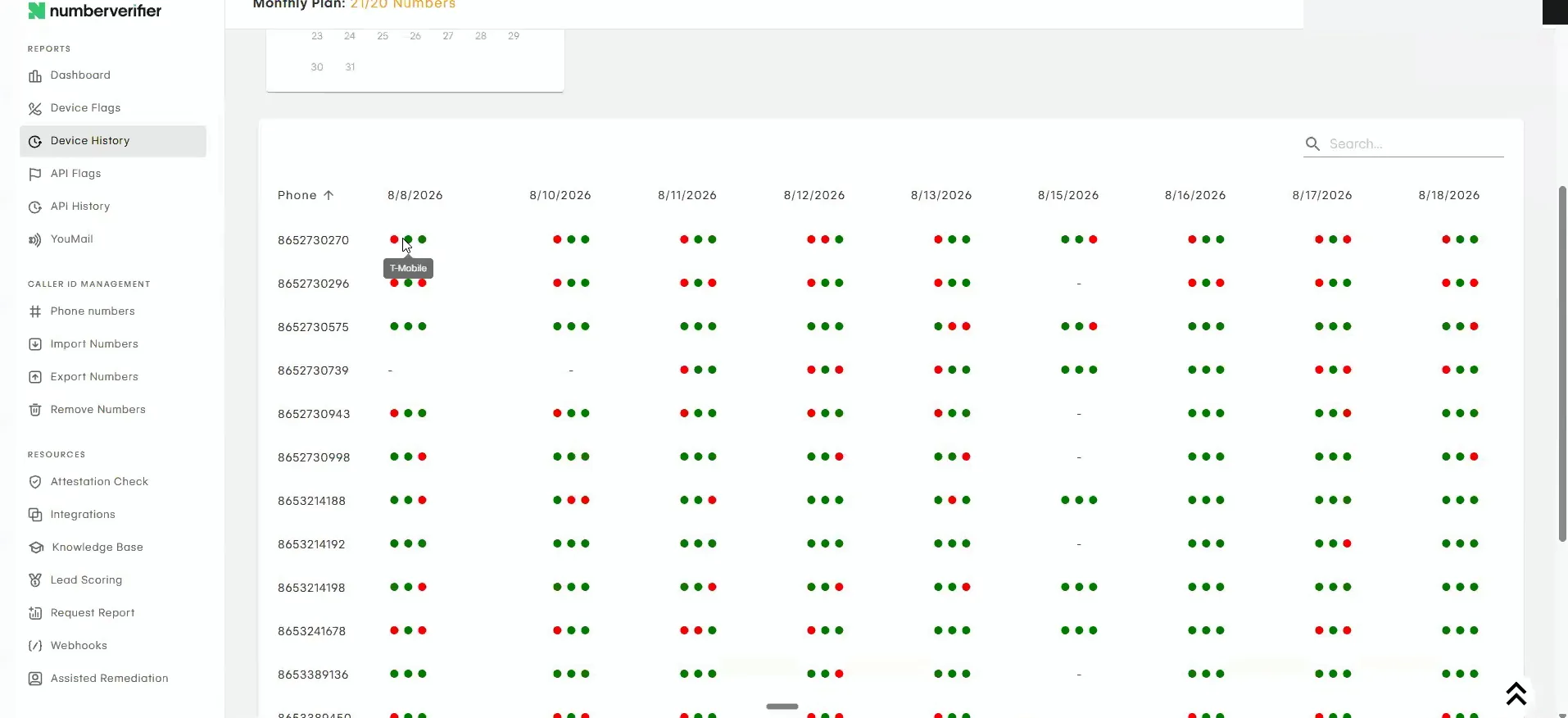
Device history checks the carriers every time you dial outbound. Some rows are green and some are red, and you will see them fluctuate a ton. AT and T for one of my numbers was marked as spam on August 8. It changed to cleared on the fifteenth, then went back to spam on the sixteenth.
What I am seeing is that AT and T is very, very difficult to get past. I am also seeing that the more outbound dials you make, the faster a clean number drops back into spam.
I know it's really hard to tell, but, you see how some of these are green and some of them are red?
Let the remediation run on every flagged number.
As soon as they detect spam on one of your numbers, they go through a remediation process. They reach out to AT and T, to Verizon, to T Mobile, and ask them to remove the spam marker.
Only a handful of my numbers are currently marked as fully cleaned. Those are the ones fully not marked as spam. I went to the phone provider and asked what was going on, and they told me this is a recurring issue they are working on. That means who knows when a long term fix lands, so I pulled the trigger and got this tool for myself.
And this changes every single day, and there has not been a day where at least a quarter of my numbers have not been marked as spam.
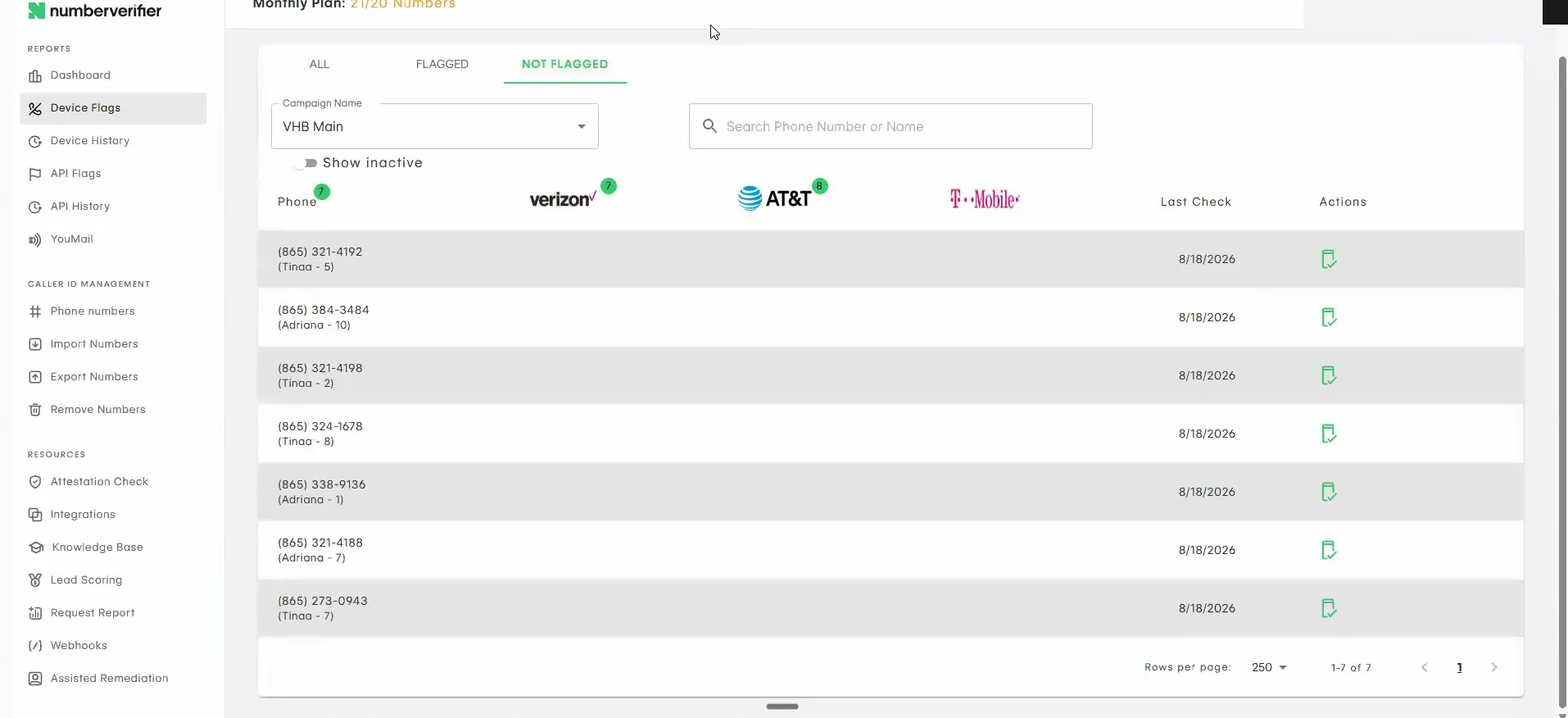
Telnyx is going through large issues.
Check which carrier actually supplies your numbers.
A lot of these companies work directly with the carriers that supply the numbers to them. From my findings there are two very large institutions doing that, Telnyx and Twilio. I would say they cover 90 plus percent of the market share.
Telnyx is going through large issues as a carrier right now. I met with them and they are working through a fix. My numbers have been moved over into Twilio, and I worked with their engineering team to see if that makes a difference.
So that would be why a lot of people have had less connect rate if they're using smartphone in the last few weeks.
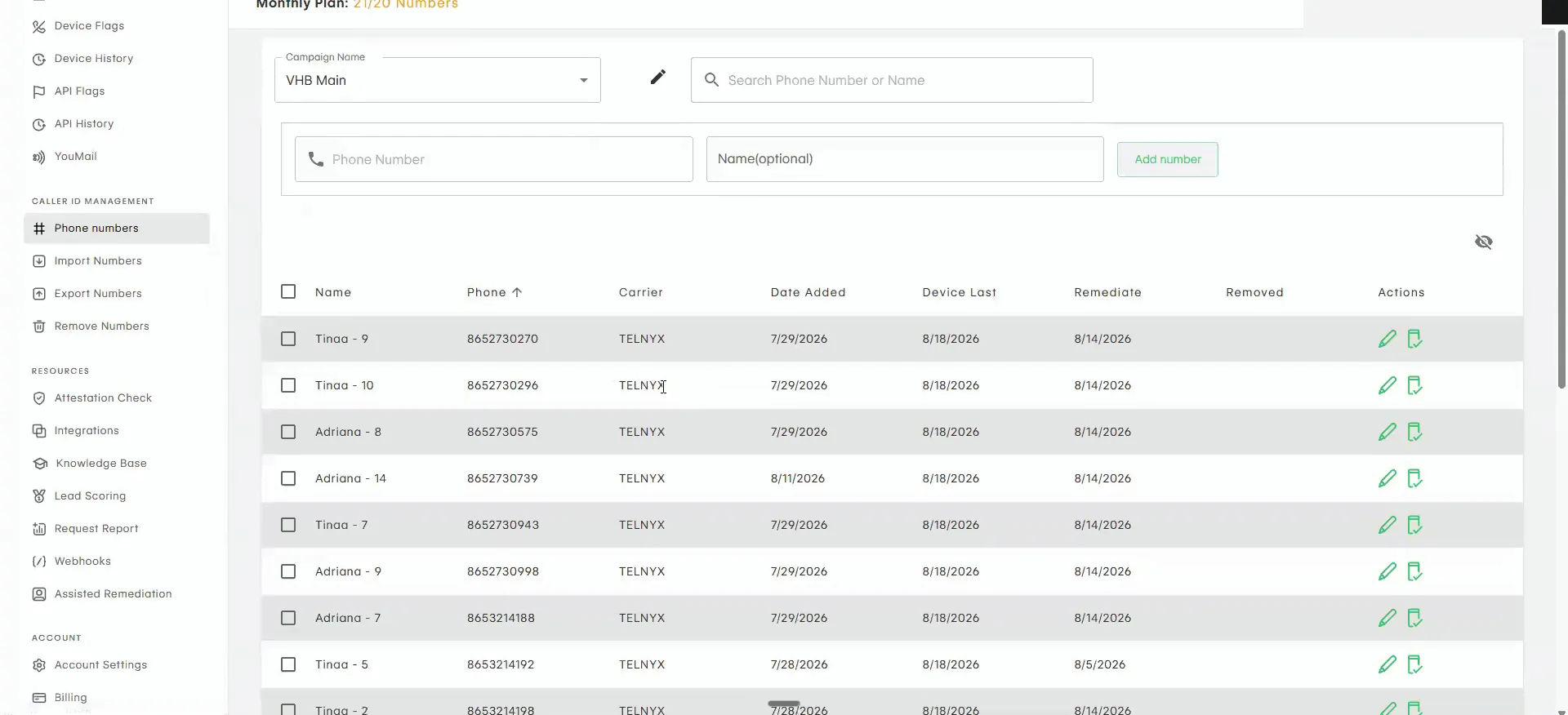
Run Trestle and Number Verifier together.
Number Verifier is the only way I am finding to fight the spam issues, and Trestle combined with that. These are my findings from the last few weeks on all of this.
Phil asked me straight out if you are going to get spammed at some point. Yes. There is no amount of due diligence you can send that keeps every number clean. Every day it is different, and it was way more dynamic than I thought it was.
I am looking at alternatives, but they are big pie in the sky research. I have no idea if they will work, so I am not sharing them here. I do not want anyone to mirror me and waste money on it.
Because if you don't use Trestle and don't use number verifier, you will have a contact rate that is very, very, very low.
A large community gets us leverage.
Budget the minimum before you sign up.
Part of the advantage me and Tyler have is I can go to a company like this and say I have a very large community. I need you to help me fix this, because you are going to face backlash and that becomes my problem. That helps us solve these issues faster than a standard user would.
The remediation is all automated. It is $10 a line with a $150 minimum a month, and you have to have 10 numbers. It goes up from there. This is literally weeks old for me, so it is super new, and I have asked them for a direct contact for the community.
The company is also owned by Blacklist and Alliance, which is the largest provider of litigation data. So I am guessing they have some kind of first party data to fight some of this.
What it costs
The minimum price is a 150 a month.
The mitigation is automatic once your numbers are on the platform.
Watch contact rate by carrier, not just by number.
Contact rates by number depend a lot on the carrier. AT and T gives us a low contact rate because from my findings they spam everything. Verizon has been a little more lenient.
Back in the day we used to have the team call me or call someone else on the team to check. I have AT and T and the number showed as spam. Rami has Verizon and the same call did not look spam to him.
You could build very advanced workflows off this. If this is an AT and T number, don't even deal with it because we know we may not be able to reach it.
a lot of the transactions that we've done are all on numbers that we had clean, clean slates on from, like, that carrier specifically.
BEFORE YOU MOVE ON