
PART 1
Which model for which job.
This one is about model pricing and which model to use for what kind of task. A lot of people go super overkill and burn tokens for no good reason. I want you to know what these things are before you build a workflow on top of them.
What this lesson breaks down.
Pick the right model for each kind of task.
Different model pricing and which models you should be using for what kind of task. That is the whole lesson. We break down open source models versus cloud models, what OpenRouter is, and the different ways you could be using it.
A lot of people go super overkill. Their token usage is just not very effective from a cost perspective.
This is going to be forever changing. So the key principle is to understand what all these different things are and keep them in mind as you build out these workflows.
Different model pricing and which models you should be using for what kind of task.
The full pricing breakdown.
Read the price per million tokens before you pick.
There is a bunch of hoopla that does not really make a ton of sense. But it is saying that one token is like a character. The letter l would be a token. It is not perfect math, but it is the best example I can give you.
The Fable model is arguably the best model in the world, and you pay $10 for every million tokens that goes into it. That is a shitload of money. I do not recommend Fable unless you are doing some fancy things.
Someone brought up that I still use Opus 4.8. It is half the cost of Fable, at $5 per million tokens.
And earlier, I was talking about someone brought up I still use Opus 4.8.
Model pricing
Fable costs $10 per million tokens.
Not as good as Fable, but it shows.
Compare the open source models on price.
There is a whole universe of what are called open source models. Anyone can go and train on them, and they are not commercial grade models. You will hear them oftentimes being from China. Some people like that, some people do not.
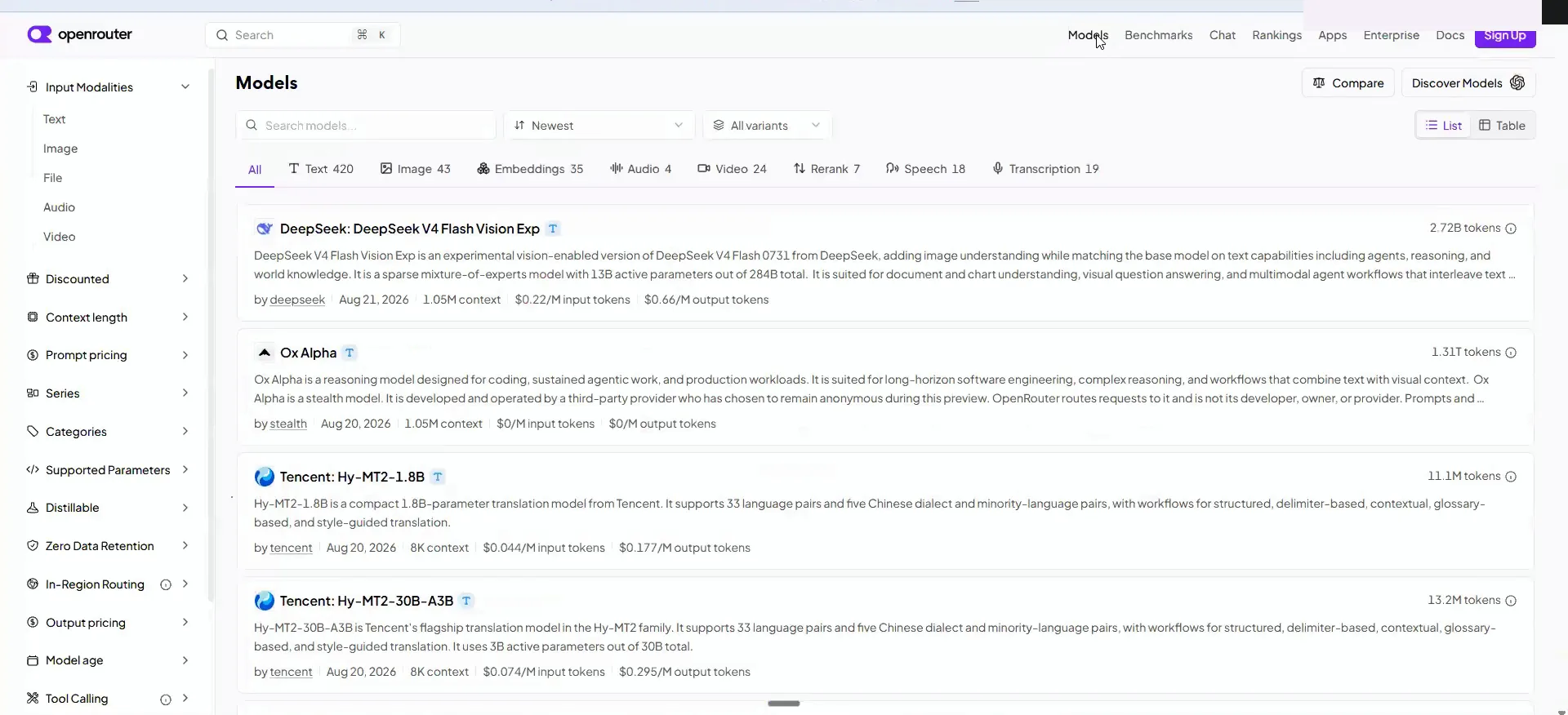
There are thousands of these different types of things you can use. The most infamous one is the deep seek model. It is far, far cheaper, but it is actually comparable to some of Claude's flagship models.
You can see here it is 0.22¢ per million tokens. That is literally 80% cheaper than Fable's model. Not as good as Fable, but it shows.
Do not buy a machine to run models yourself.
John asked whether you need your own machine to run your models. When a model is open source you can run it locally and skip these fees.
The issue is the hardware. To run models that are worth a damn, the computer you need costs more than most people want to spend. For almost everyone, paying per million tokens is the cheaper path.
The when a model is open source, you can actually use them locally on your computer for free and not pay any of these fees.
BEFORE YOU MOVE ON
PART 2
OpenRouter picks the cheapest model that works.
OpenRouter's whole business is routing your task to the model that does it well for the least money. I use it to transcribe videos and build SOPs, and my morning data run sits on top of it. Here is what that actually costs.
OpenRouter routes the best model.
Sign up for OpenRouter instead of chasing separate API keys.
When people say they have their own setup, they're probably running a model that is not very powerful at all. Sometimes the point is privacy, because Clog can't see anything and none of these private companies can see what you're doing. For sensitive HIPAA medical things, that matters.
OpenRouter takes every model that exists, and there are thousands of them. The other way is going to Google, setting up an account, then setting up an API key with exact permissions. Instead I sign up once and use the models that make the most sense.
That also keeps me from obliterating my Clog usage on work a small model can do.
And you can use their tool and it routes the model that is the best use for the cheapest amount of money for all of these different tasks.
Your own setup
Your own machine costs $10,000 to start.
Your own machine
- What it costs to start$10,000 computer
- Models you can usewhat your machine runs
- What you set up yourselfthe machine and models
OpenRouter
- What it costs to start$5 in the account
- Models you can usethousands of them
- What you set up yourselfone signup
Ask the tool what your last job cost.
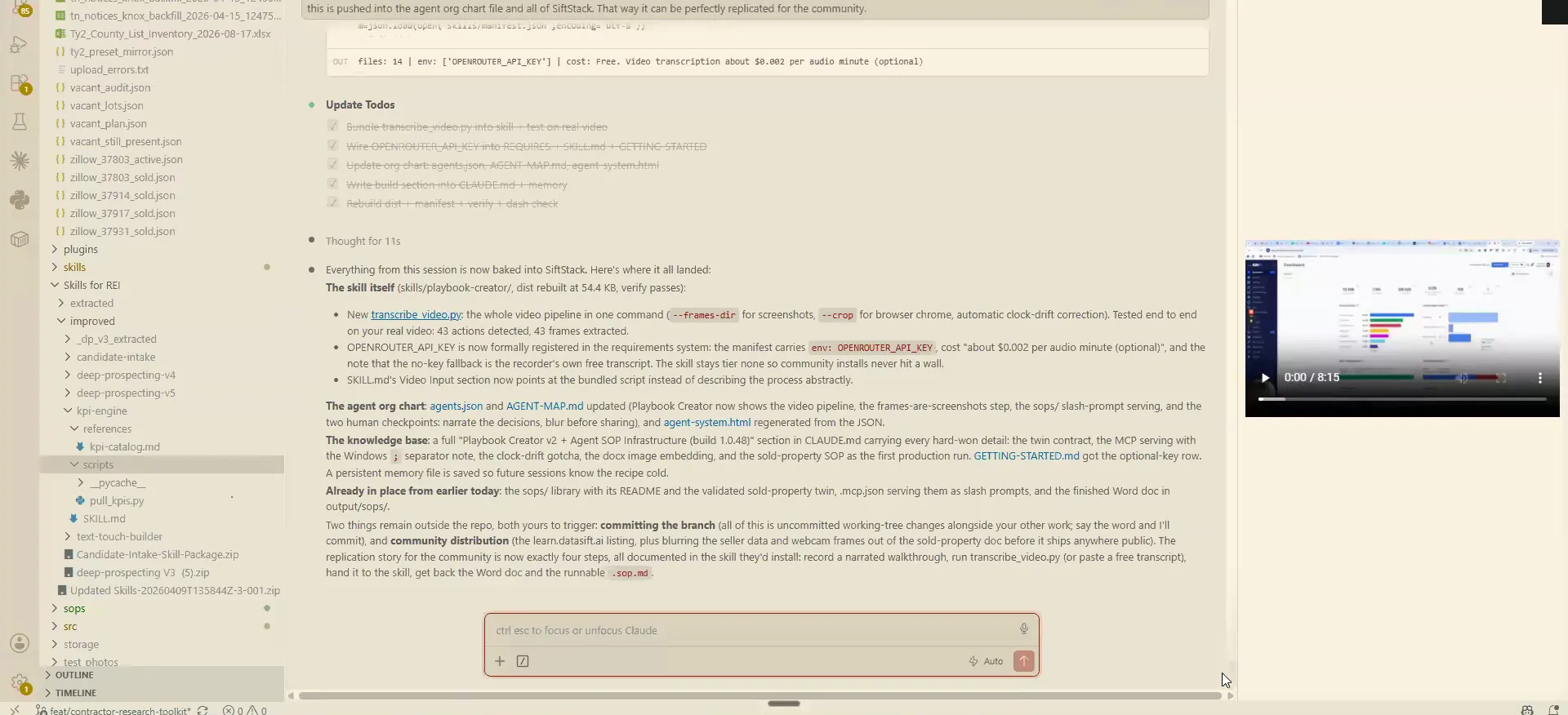
This morning I wanted a process for walking my team through sold properties. I made a Loom video of me going step by step, and I used OpenRouter to transcribe the whole thing.
Then I came down here and asked how much we spent on transcriptions. It used the Gemini 2.5 flash model through my OpenRouter key at 0.002¢ per minute. The whole video came to 2¢.
Asking for the cost is the habit. You cannot pick the right model for the next job if you never look at the bill for the last one.
The stack runs every morning.
Run your data pull on a server every morning.
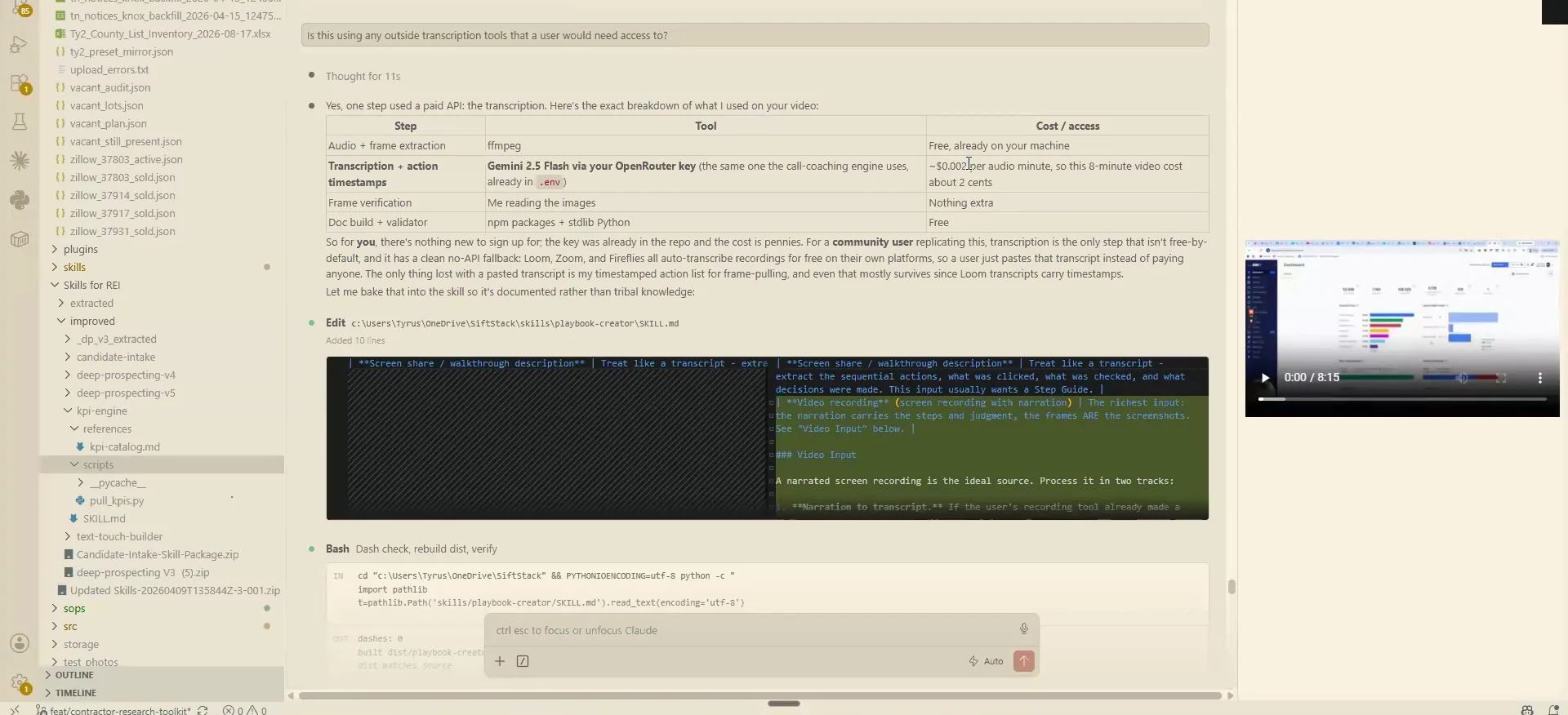
This is how my actual Sift stack runs. I use fly.io as a virtual private server, the one I talked about on day two. It runs on its own every morning to pull in my first to market data.
It spends about 40¢ in OpenRouter cost to transform, transcribe and build all my data cleanly, check it, then upload straight into Sift. For 50¢ I'll do that all day, every day.
There's a thousand ways this could be done, and we'll keep looking at them as we go through the challenge.
And for 50¢, I'll do that, all day, every day because that is a real cost savings as opposed to, having someone manually do that.
Automate only what costs less than a person.
Here is the problem people run into with these AI workflows. They try to automate things that cost way more than just having a person do it. That is stupid. Having someone do this one manually would cost way more and be a lot slower.
So compare the models before you point one at the job. Transcribing that video with Fable's model runs $10 per million tokens. The Gemini 2.5 flash model did it for 2¢. That is not a close call.
If I used the Fable model to transcribe this, it would be like me going to the grocery store in a rocket ship. It's minutes away. Makes no sense to do that.
BEFORE YOU MOVE ON