
PART 1
How we handle DNC on outbound.
The question was simple. If you download a list here and dial it, what do you do about DNC so you do not get sued. Here is how we actually handle it, and the one list I want everyone to scrub.
How we actually handle that.
Protect yourself legally before you dial a single number.
There are a lot of different ways to go about this. The main thing is making sure you suppress DNC, if that is what you are trying to do. The other is being as legally protected as you possibly can.
I am not an attorney. If you want to know the legalities, check with one. At the very, very minimum, I highly recommend that everyone watching this suppresses the TCPA litigation list.
I'm not an attorney, so make sure that you check with one if you're, interested in seeing that the legalities of that.
What I do and do not pull.
Remove anyone who asks, and never call them again.
Again, that is my disclosure here. I am not an attorney. I do not pull the DNC list.
What we do instead is take you off when you ask to be taken off. I have been doing this a long time and I have not had any issues, knock on wood.
we just remove you when they are asked to be removed, and we never call them again.
Scrub the TCPA litigation list on every pull.
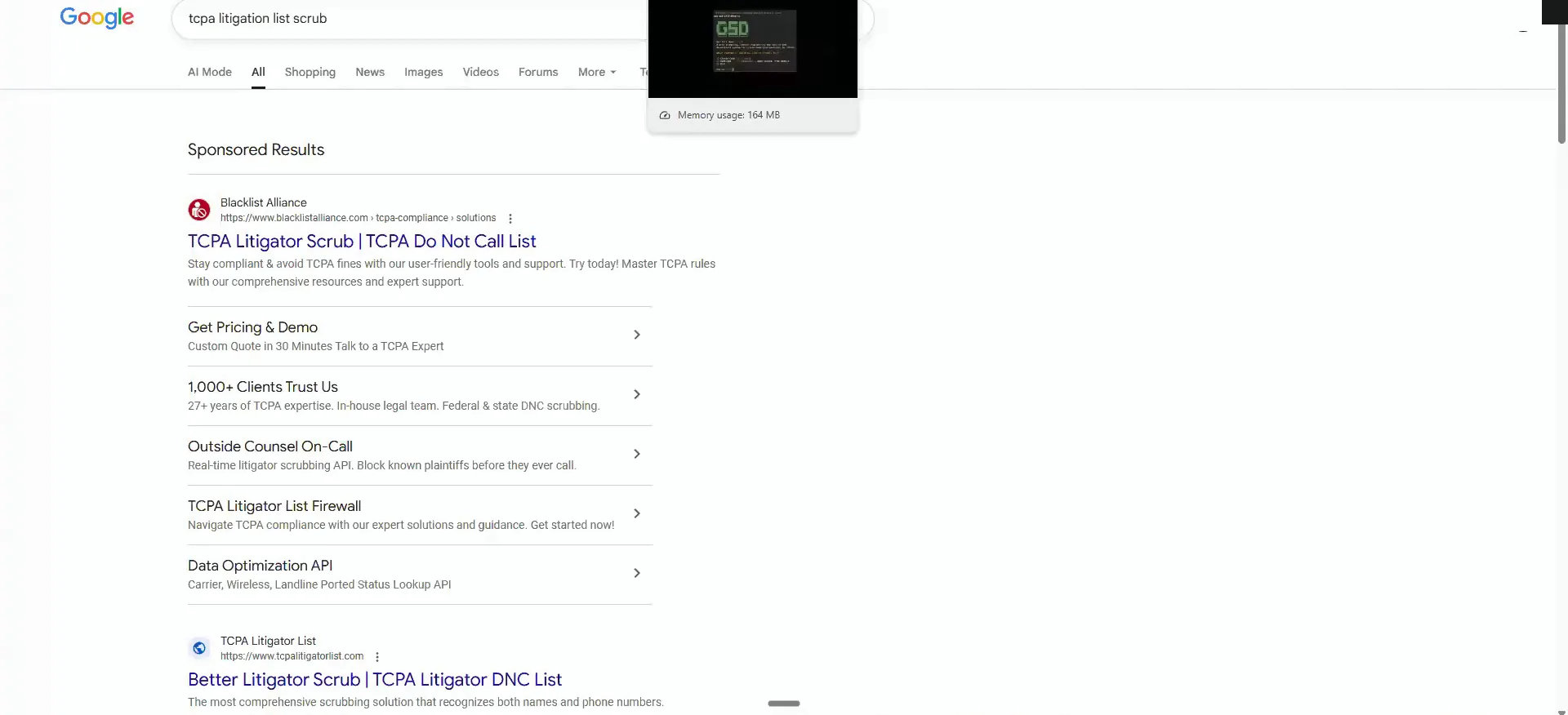
Type TCPA litigation list scrub into Google. Blacklist Alliance is the number one option for this, and you can go through that process.
These are people who are either suing people actively, or they are trying to bait you so they can sue you. I highly recommend you burn those numbers and never ever touch them.
We are also talking about Trussle today, a workflow that scores phone numbers so your connect rate is higher. It has its own built in version of this.
And then the list I would absolutely recommend everyone to pull is the TCPA litigation list.
Count what is left before you suppress all DNC.
Everyone always asks why I would not just suppress the DNC. You could, but it removes about 60% of all phone numbers.
One person on the call said the same thing with Skip Genie. He was left with just 30 to 40 numbers in hand, and finding a deal in that gets a lot harder.
And you could, but it removes about 60% of all phone numbers.
Suppress the DNC
Suppressing DNC removes most of your numbers.
BEFORE YOU MOVE ON
PART 2
Free and clear, and where to filter.
Free and clear means 100% equity, and the unknown bucket belongs in that same pull. Estimated value is close to a Zestimate, not an ARV, so set your cap with that in mind. Then bring as much data as you can into records and do the heavy filtering there.
Free and clear is 100% equity.
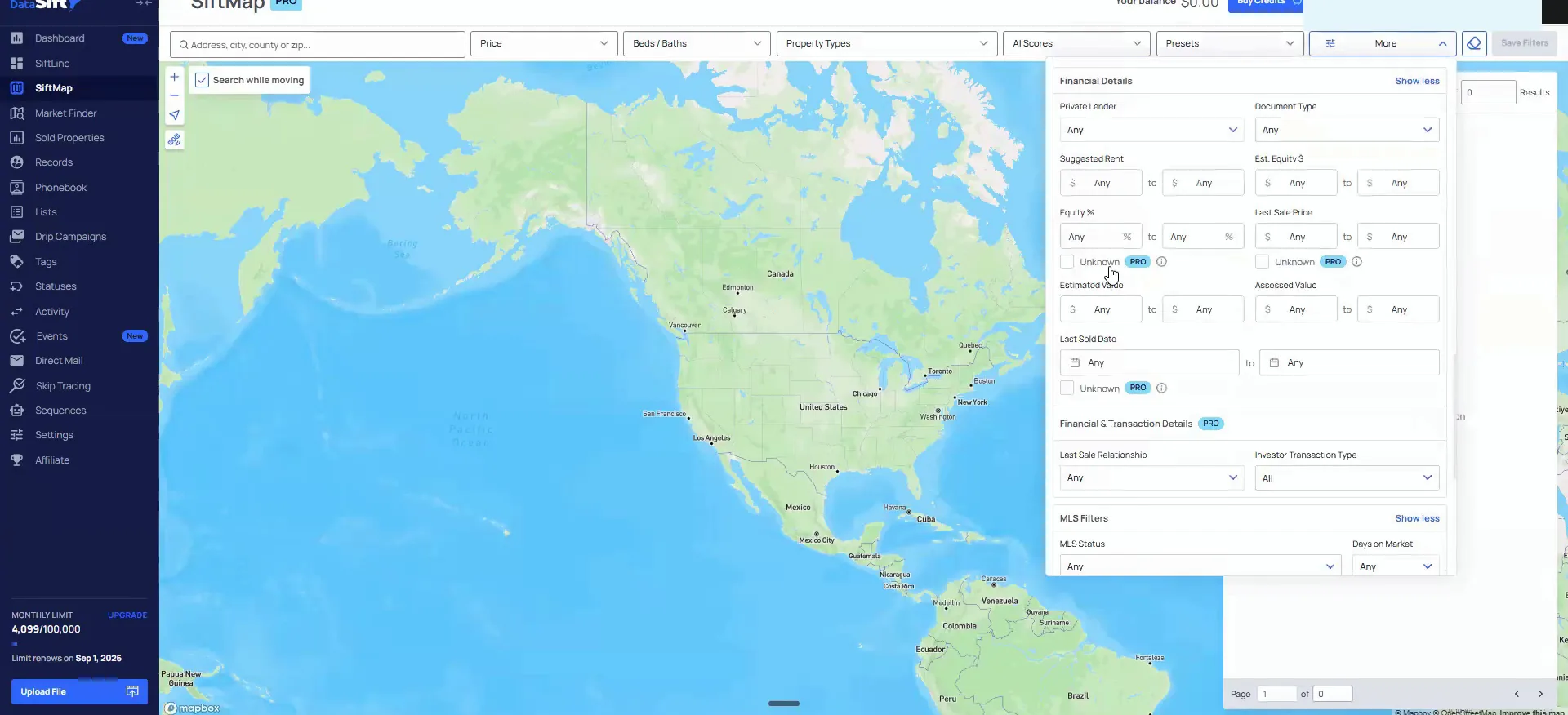
Check 100% equity and check unknown too.
When you are looking for free and clear, that is 100% equity. Right next to it you will see unknown. Check that one as well.
We have tested this a lot. You miss out on a lot of deals because unknown is often half of a list, or more in some cases. That is especially true in nondisclosure areas.
And you'll get more lists or sorry, more properties that fit that, but it's better to bolt them in anyway, especially when you pair it with something else.
Treat estimated value as as is, not ARV.
Best I can give you is that estimated value is very comparable to a Zestimate. It is not the ARV. It is closest to an as is number, and it is the one we can hold standard across the board.
I am in Knoxville, and we are not a nondisclosure area. If estimated value says about 200 k, the ARV is usually between $2.30 and $2.60. It depends on the area and those factors.
If our property value says about 200 k, call it, in this estimated value, the ARV is usually between $2.30 and $2.60.
Estimated value
Estimated value is not the ARV.
If you want an ARV of 300, set your max around 400 to be safe.
Set your value cap above the ARV you want.
Say you do not wanna go over 300,000. Putting 300 max of value would be the retail number, and this field is more as is.
So if you want an ARV of 300, set the cap closer to 400 to be safe. That keeps the homes you actually want inside the pull.
Pull all the data into records.
Pull everything in, then filter inside records.
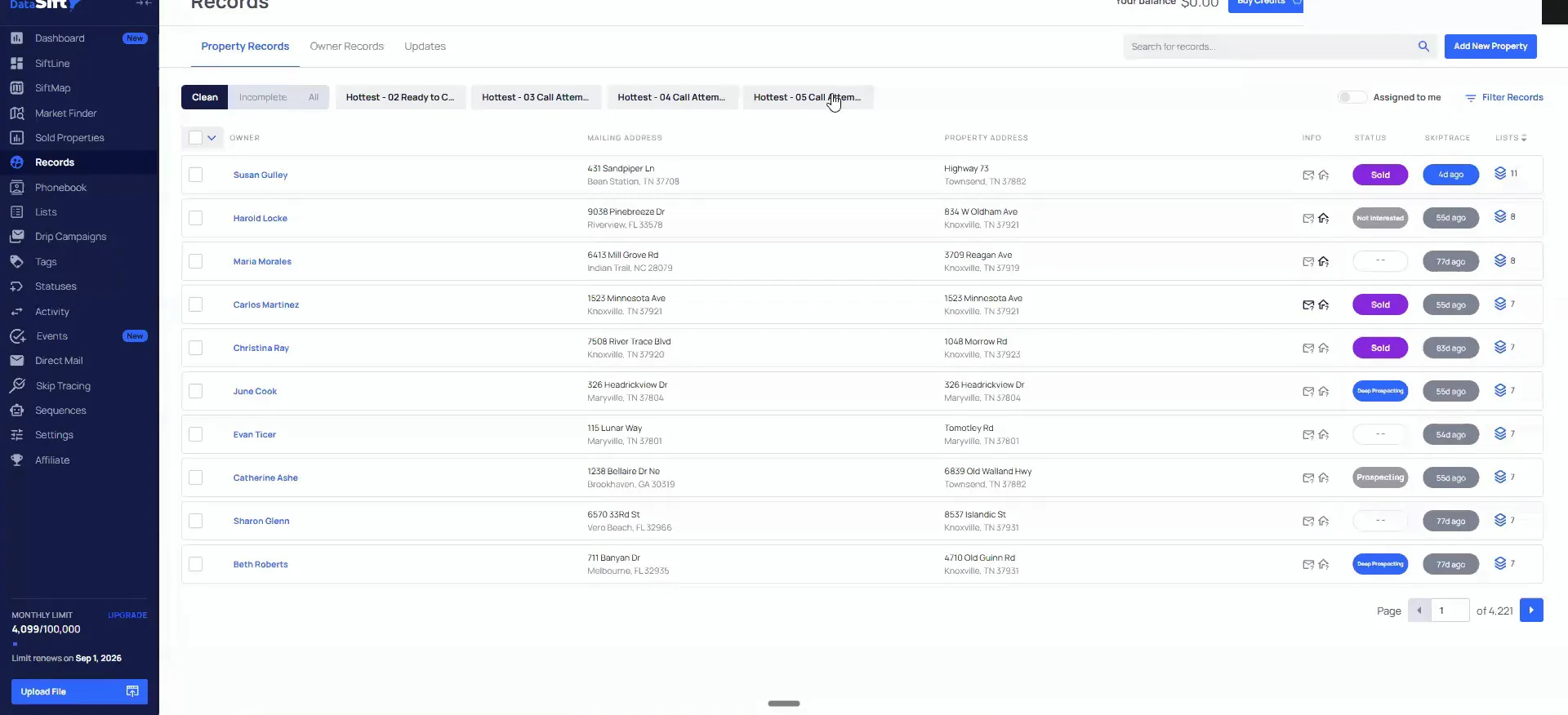
I like to pull in as much data as I possibly can through SitMap and through scraping the county. That goes straight into records. Then I do a lot of my heavy filtering down in the records page.
There are cases where I do not want vacant land in my records, because I am never gonna market to it. Things I know are never cards, I leave those out.
Whenever you are pulling in data, it is okay to get as much as possible. The filtering that really matters happens in these workflows.
And there are cases where, ideally, I don't wanna have, vacant land in my records because I'm never gonna market to it.
Filter harder in SitMap if you want 100 records.
In the beginning, just get as much as you can. Then we parcel them out based on the ZIP codes and the things we are looking for.
If you are new and you are picking your dream 100 records, that is a little different. You might be really heavy on the filtering inside SitMap instead.
But if you're trying to, it out exactly how I do, that would be that's kinda how I think about it.
Run litigation, Trestle, and number verifier.
Somebody asked about scrubbing the DNC and Trestle, because that takes out about 80 to 85% of the data. Without scrubbing, the connect rate is nonexistent.
You guys are trying to get me in trouble. Legally, you can do whatever you want. I do not do the DNC, just because I would have nothing left to call.
I do litigation, then the Trestle workflow, then number verifier. Your phone health should be much better than normal. Spam is a recurring issue in the industry, and there is not much you can do.
And as you said, scrubbing with, scrubbing the DNC and then scrubbing Trestle, that technically removes about 80 to 85% of the data.
Scrub flow
Run litigation, then Trestle, then number verifier.
- 1Litigation listBurn the TCPA litigation numbers and never touch them again.
- 2Trestle workflowScores phone numbers so your connect rate is higher.
- 3Number verifierLast pass before you start dialing the list.
BEFORE YOU MOVE ON