
PART 1
Deep prospecting and how skip tracing works.
Deep prospecting is how you get in contact with the decision maker when your normal marketing could not reach them. This Part covers what it is, where it lives in the account, and how skip tracing actually works underneath it. Start with the obituary data, because that is where it matters most.
What deep prospecting gets you.
Squeeze the most out of the data you already have.
Deep prospecting is incredible at helping you squeeze the absolute most out of your data. It gets you very high returns on ad spend, or just really strong ROIs in general.
It also explains a lot of different ways of how skip tracing actually works. Most people just kind of hear it as a buzzword, and it has never been explained to them at a very technical level.
That matters because it shows you how deep prospecting ties together with skip tracing. You need that when you are considering using the deep prospecting workflows.
Where deep prospecting lives.
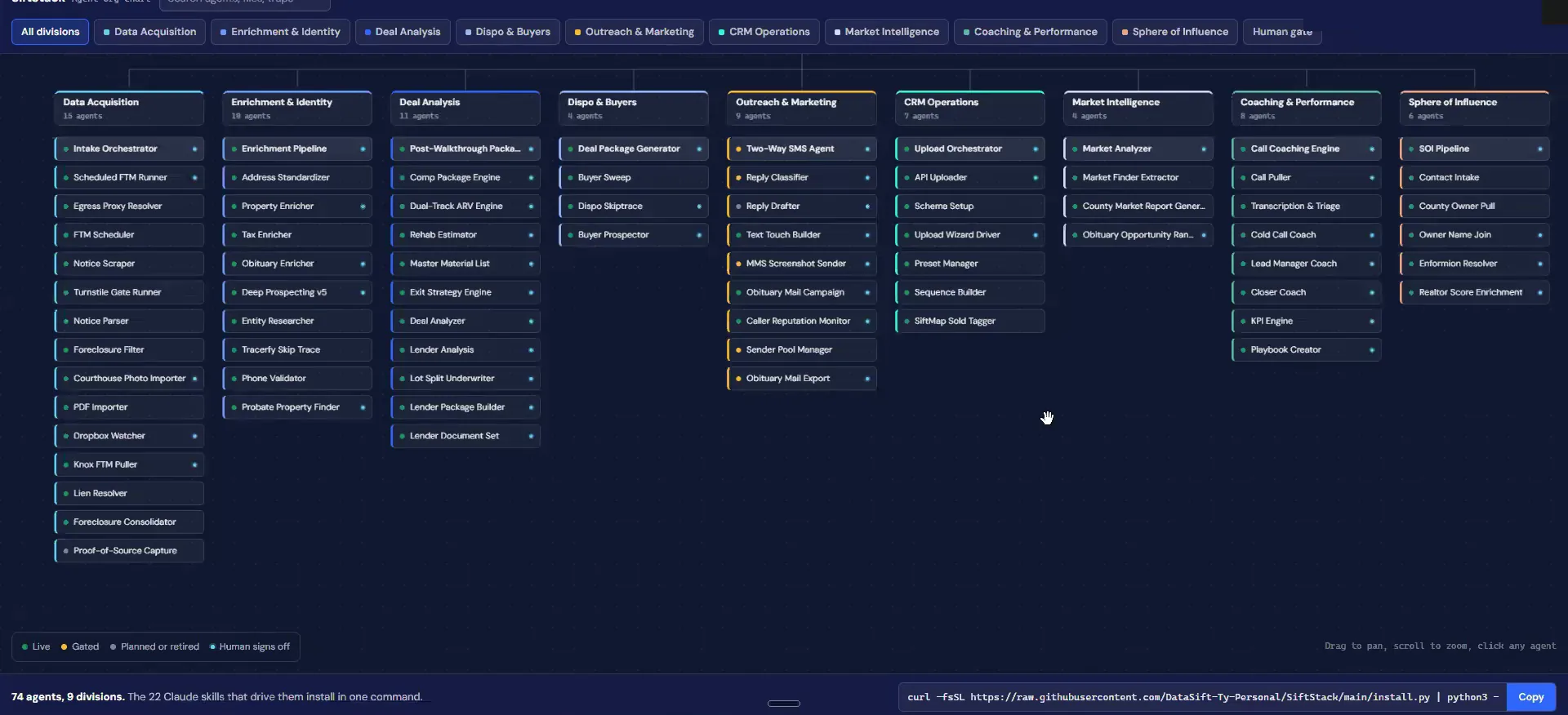
Open the agent flow and look at the prospecting tools.
To kick off and start the day here, the first thing we are talking about is deep prospecting. If you go inside of the agent flow, there is a ton of stuff about the prospecting in there.
What prospecting fundamentally means is getting in contact with the decision maker, or the owner, or whomever you need to reach. The point is you were not able to reach them in the past.
to kinda kick off and start the day here, one of the first things that we're gonna be talking about is deep prospecting.
Go to records and open the deep prospecting filter.
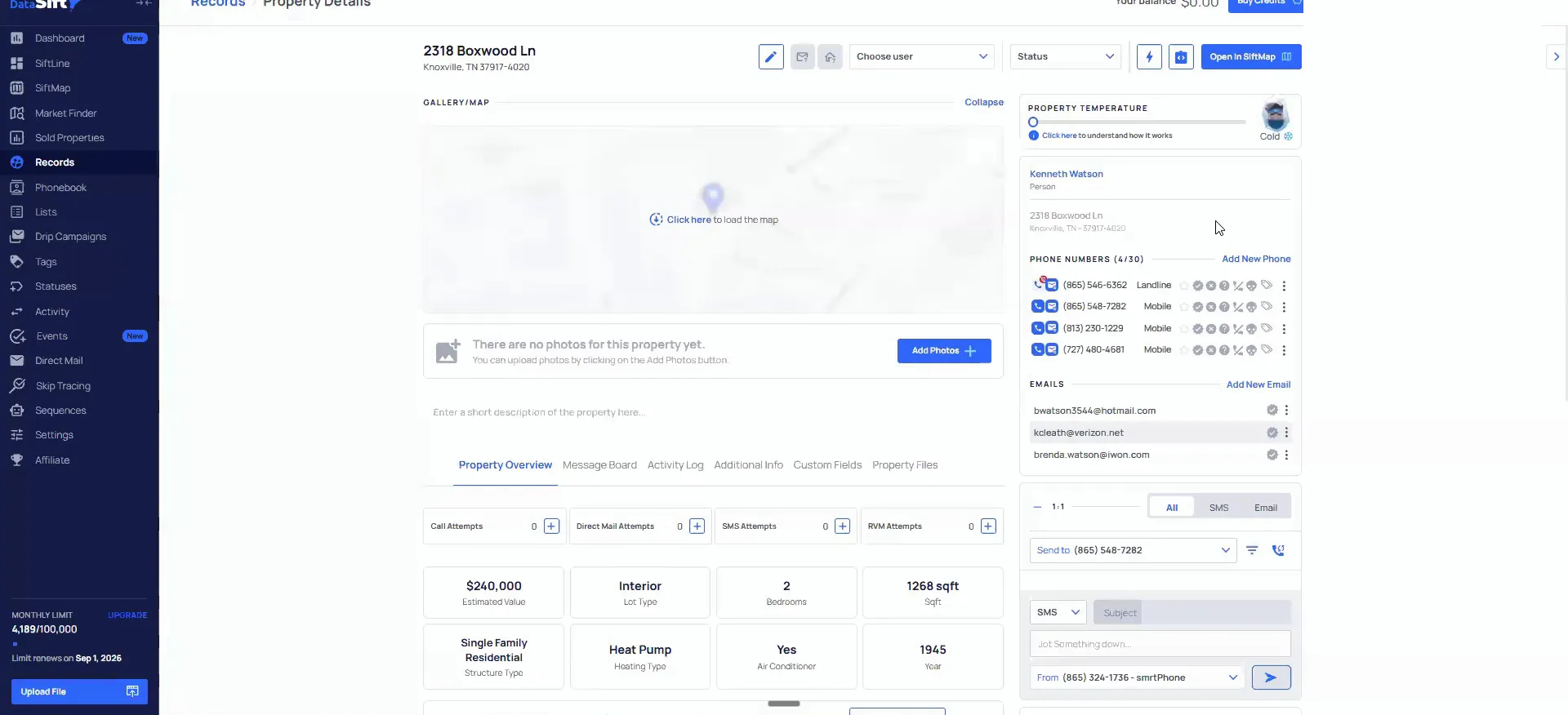
Go to your account and come over to records. I have an entire workflow dedicated to just the obituary data.
Come in, go down to deep prospecting, and look at the records that are in the obituary filings. You can see they have the deep prospecting tag on them.
Click on a record. If you try to do outreach to this individual, it is skip tracing the owner that is on file.

Learn the levels and tiers before you skip trace.
When there is an obituary record present, you are essentially skip tracing and trying to reach an owner who is deceased. The odds that you reach them are very, very low.
Companies like DataSift or SmartSkip or DirectSkip use skip tracing for marketing purposes. There are heavy stipulations and regulations we have to follow as a company to give you access to this data.
Say there is a warrant out for your arrest and the police are trying to find you. They can use ungated, unrestricted skip tracing and reach out to AT and T or Verizon and find your exact number. Private investigators are kind of the blend, going really deep into genealogy to find the exact person.
The KPIs that Tyler and I have kinda found on this so far is the way skip tracing works is there's kind of levels and tiers to it.
BEFORE YOU MOVE ON
PART 2
How skip tracing really works.
Most people have never been told what happens when they hit skip trace. So I want to walk through it, then show you the providers I trust and the process I run. Then we get into the second place deep prospecting pays, which is return mail.
About 6,000 sources and a guess.
Send the five fields you already have on the record.
We have about 6,000 sources that we pull from on our raw providers. We put in the date of birth, the first name, last name, the mailing address, and the property address straight into this system.
Then it guesses. It gives you every number that has ever come back tied to that person. We try and guess which one of the top five we should send out to a user.
That guessing system is the big difference between marketing skip tracing and unrestricted, governmental use skip tracing. Companies that have been verified to manually look someone up have a different level of access than we do.
And we put in the date of birth, the first name, last name, the mailing address, and the property address straight into this system.
How it works
What happens after you send the five fields.
- 1Send the five fieldsDate of birth, first name, last name, mailing address, and property address go straight into the system.
- 2Pull from the sourcesThe system looks at all of the numbers that have ever come back associated with that individual.
- 3It guesses the top fiveWe try and guess which one of the top five we should send out to a user.
- 4Skip trace three timesAnything kind of past that point is diminishing return.
Skip trace every record three different times.
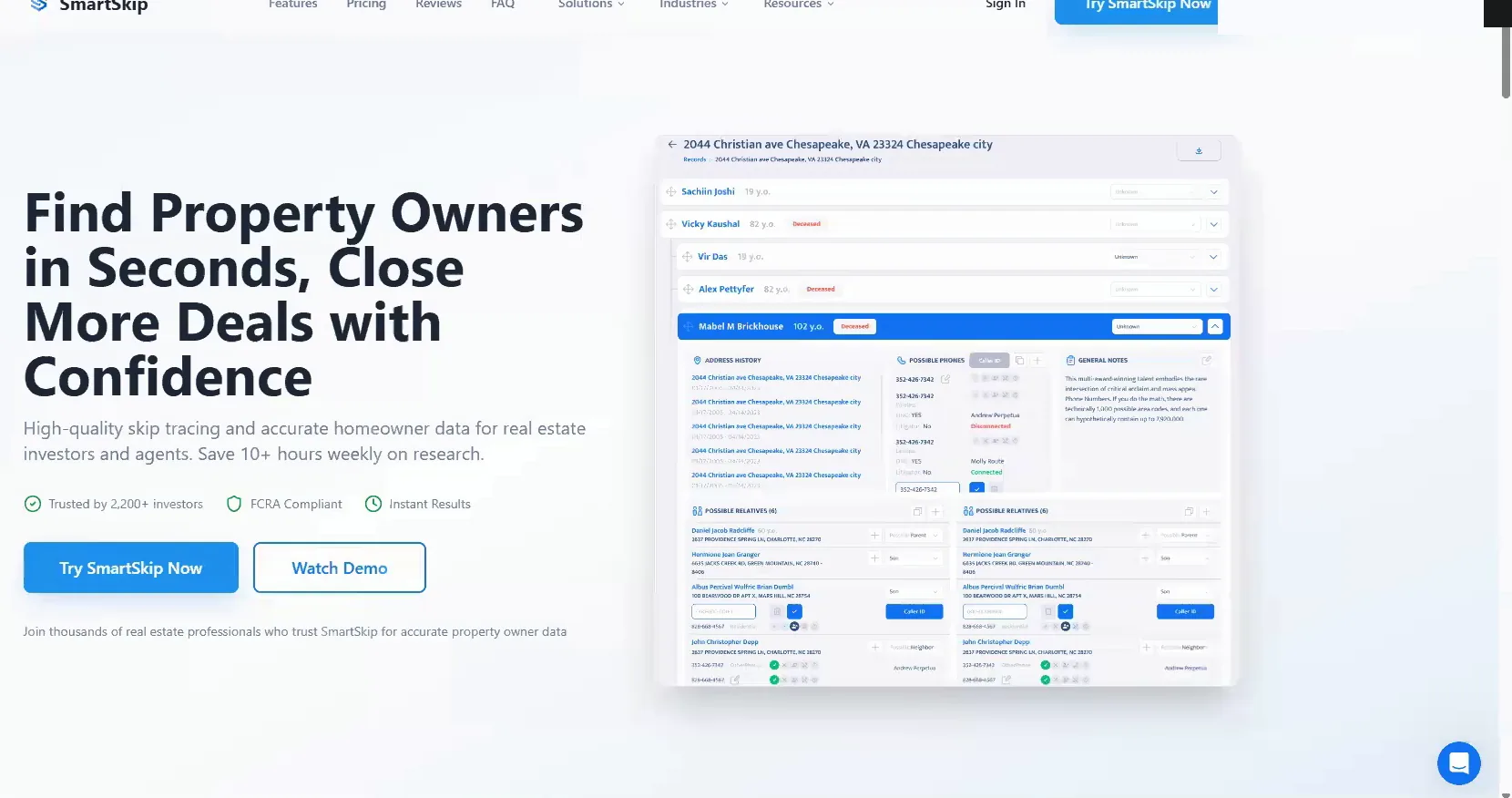
Anything past that point we have found is diminishing return. The ones performing the best right now are DataSift, SmartSkip, and DirectSkip. I have been using TracerFi historically, but I am moving over to DirectSkip. I just have not done it yet.
Tyler was split testing DirectSkip and we saw much better overall contact rates over there. Spokeo is another one where you are manually looking something up, and that is typically a little bit better. Forewarn is by far the best in that category if you are a licensed agent.
If you are going to pick one additional one, I would do SmartSkip. Their data is wild. Those links are straight from the website, not affiliate links.
Return mail is the second use.
Budget for SmartSkip before you run it at volume.
They are using IDI and I think another company, but I am not totally sure what the other provider is. If our skip tracing was this good, we would not need anything else.
The problem with them is at 15¢ a hit, it gets pretty pricey when you need to skip trace multiple times on the deep prospecting side. It is incredible for curative title as well. If you are doing any of the curative stuff, this is your day.
We take all of these skip trace records and run each one of these numbers through Trestle. We also tag them by the relatives associated with the record. That is the whole obituary side.
They they're using IDI and I think another company, but I'm not totally sure what the other provider is that's kind of, their direct provider.
Go into records and filter no or bad phone numbers.
Inside deep prospecting there is also no or bad phone numbers and return mail. Return mail is such a good process to do this for. There is a case study from someone on this call, and I am sorry, I cannot remember the name.
They got six deals from return mail in the first three months of running this process. This is all in the guide, so everything I am talking about you can see step by step.

Scan your returned mailers into one PDF.
For direct mail that gets returned, take the whole stack that came back to the office or the house. Go to Office Depot, or I want to say Staples, and use a printer to scan in everything.
It makes a PDF of all of the return mailers, so you can see the front and back of each one. Then take all those addresses and come back in. Have your VA or admin mark the record, say Kim Watson, as return mail.
BEFORE YOU MOVE ON
PART 3
What deep prospecting costs and when it pays.
These records are the ones your normal marketing already missed. Here is the contact rate we measured, what the full flow costs per record, and where I would spend it. The last chapter is the workflow Phil and I talked through on the call.
These people are exceptionally difficult to reach.
Change the status to return mail at the bottom.
That status feeds into the deep prospecting flow. It is how a record that already failed gets picked up again.
Think about why these records failed. We tried to call them and they didn't answer. Maybe the mail got returned, maybe it is actually vacant and no one knows it is vacant.
We would go in and actually change the status to return mail at the bottom, and that will feed into that deep prospecting flow.
Compare the contact rate you get by luck to this one.
Say we skip trace Kenneth Watson, whoever this person is. You will, by chance, get phone numbers associated with him. If you call that record and it was an obituary filing, you have about a 5% chance of reaching a decision maker by luck.
Take it through the deep prospecting process and that goes to about 60 to 70%. On an obituary record the owner is deceased, so the people we would normally skip trace cannot reach this individual. That is why we dedicated an entire deep prospecting pipeline explicitly for the obituary data.
But when we take it through this deep prospecting process, that goes from 5% on a contact rate to about 60 to 70% of a contact rate.
What the full flow costs.
Budget 25¢ to 45¢ per record for the full flow.
Hypothetically you skip trace in three providers, DataSift, SmartSkip and DirectSkip, and then run that trestle workflow. On average that costs me between 25 and 45¢ per record. I am going to say it again because it is an important metric.
That cost comes from the SmartSkip flow, then skip tracing the best fit for the decision maker. Then you hit trestle on all the phone numbers available. There are cases where you have 25 phone numbers to hit trestle on. You skip traced all the potential children, so four people on one property record.
And the reason for that is that cost can get up pretty fast whenever you and I'll and I'll give some cost breakdowns on deep prospecting.
Judge the spend on getting a correct number per record.
On first to market it is worth the squeeze, and on deep prospecting it is worth the squeeze. I am not convinced it is worth it on all of the priority one data. Tyler and I yap about this on the midnight to 2AM conversational tracks.
On probate, this was all Tyler's idea. He does not just reach out to the personal representative. He runs the deep prospecting flow to find all the potential heirs even though a PR is set. He may have three correct numbers on one property, and two of them are part of the decision making.
And coming back to your original question, Phil, Tyler and I are measuring the success of this based off of getting a correct number for an individual record.
Run DataSift first, then deep prospect.
Work your free DataSift numbers before you pay for more.
Phil laid out the workflow on the call and that is also how I have had it done. Run the contact attempt through the DataSift side first, for free. Once you have dwindled the list down and still have not got ahold of them, try it a second time.
My workflow that I thought of was basically doing the our zero to five contact through the just the DataSift side first for free.
Filter the records with no or bad phone numbers.
If there are no or bad phone numbers on a record that has gone through the priority one workflow, open up this filter. Move all those people to deep prospecting, because the DataSift skip tracing was not enough to reach them.
Phil's example was a 250 list where 47 names at the end had no good number. Send those to deep prospect or to a second skip, the pipeline is the same either way.
the deep prospecting in that case is pretty much the same thing except I'm doing three skip tracing instead of two.

Spend the money where the record is worth it.
On a senior homeowner that is vacant, running that whole flow on all the priority ones is probably not worth it. You will spend a lot of money really fast. On first to market there is virtually zero saturation, because you are calling them the same day it hits the county.
On the cost of SmartSkip, I think they could charge more. That whole trestle and skip trace workflow is super powerful.
I'm telling you when you the 15¢ on smart skip, you're like, oh, that's kind a lot.
Phil's list
Only the names with no good number go on.
BEFORE YOU MOVE ON