
PART 1
Deep prospecting a foreclosure notice.
This one had a deceased owner on file and an auction coming in a few weeks. Normal marketing never touches a record like that. Here is the research run I do instead, start to finish.
The ones people aren't getting.
Reach the heir on a record marketing cannot touch.
In this example, this is one that we had a deceased owner that was on file. It was a foreclosure that was coming in the next few weeks.
We really wanted to show a good example of the ones that most people just aren't getting. If you can reach the heir, you are the only person in that conversation.
in this example, this is one that we had a deceased owner that was on file.
Stack the foreclosure obituary first.
Tell it these records are all foreclosures.
It will do a good job of kinda ranking them all, especially if you say these are all foreclosures. So don't even factor that in. They're all bad.
One of the biggest deals I've ever done was a foreclosure obituary. If the person is deceased and they're going to foreclosure, reaching the heir beats door knocking that house. That is why stacking them in that order does well.
Stacking them
Tell it these are all foreclosures, so do not factor that in, they are all bad. If the person is deceased and going to foreclosure, reaching that heir beats door knocking that individual house.
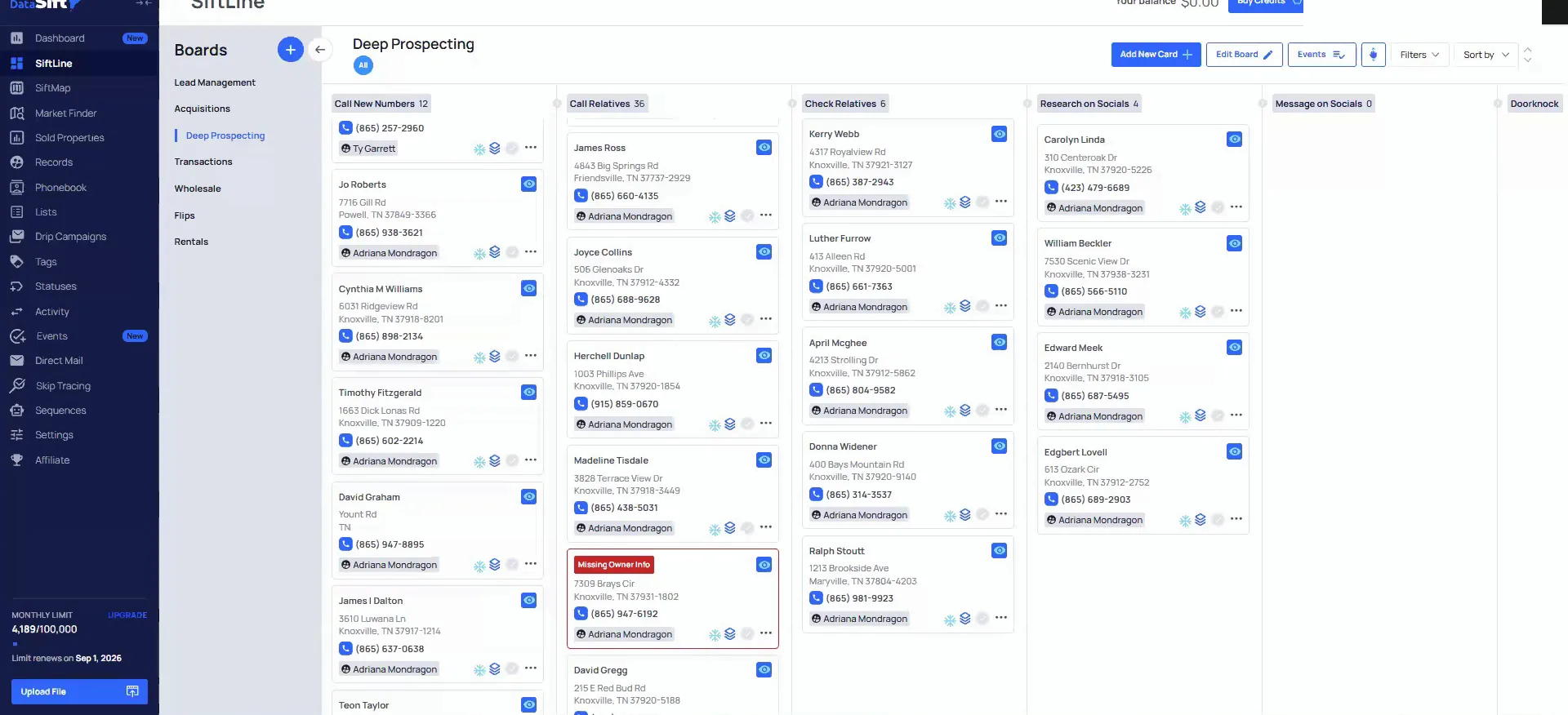
Set up the deep prospecting workflows once.
There's a ton of workflows embedded in the deep prospecting process inside of all of these workflows here. Once you've set them all up, you can do this without the API.
With the API it does more, but they are all programs that will function the same way without it. So nobody is blocked here.
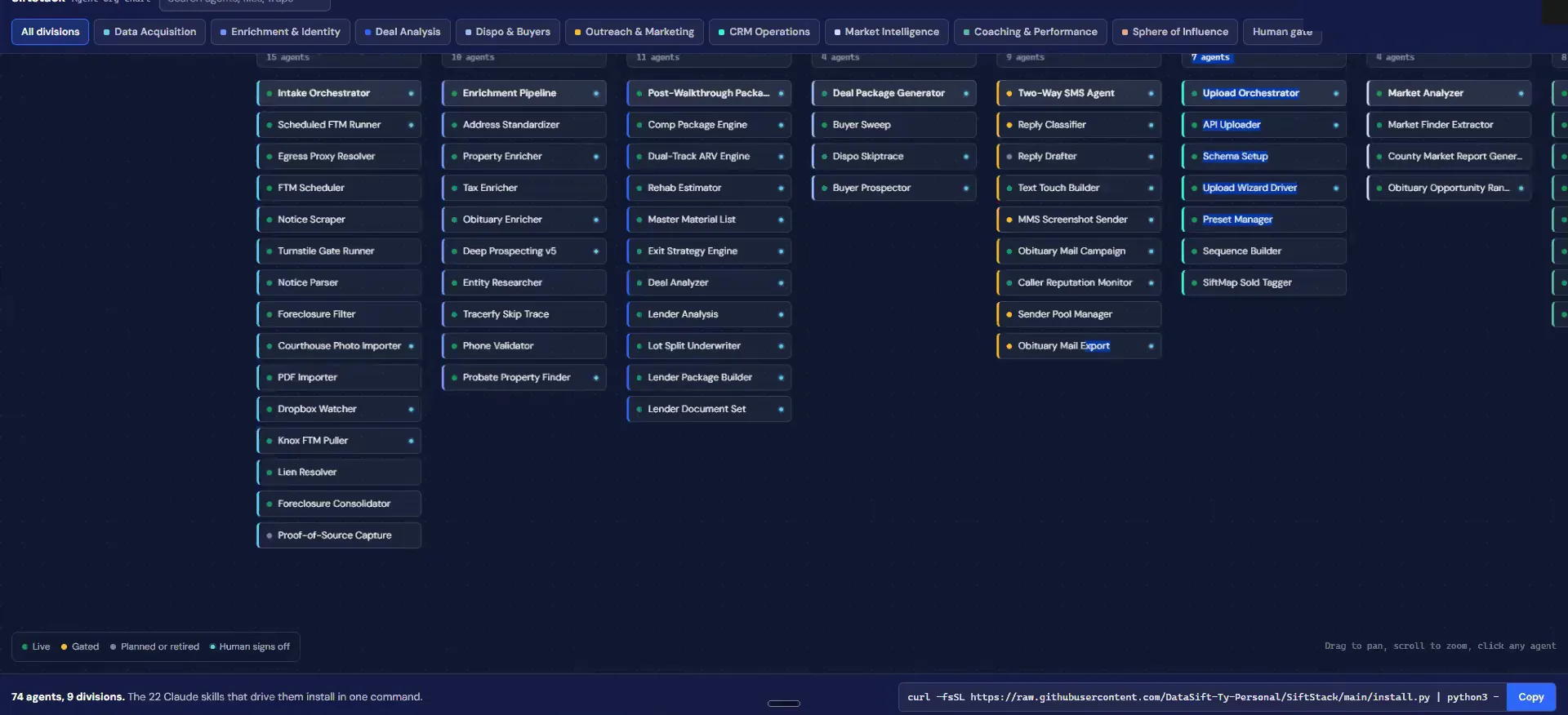
Ask it to deep prospect one property.
When you come in, you can just say, hey, can you please deep prospect this property. Just do one thing at a time. I'll show the one off first, then the version at scale.
I show this example a lot because I think it's a really cool visual aid. It's that exact scenario I was outlining, from a foreclosure to an obituary filing. This was before we had obituary data, so it's not that property.
And the way that this works is whenever you come in, I'll kinda show you guys, example of doing it on, a one off basis.
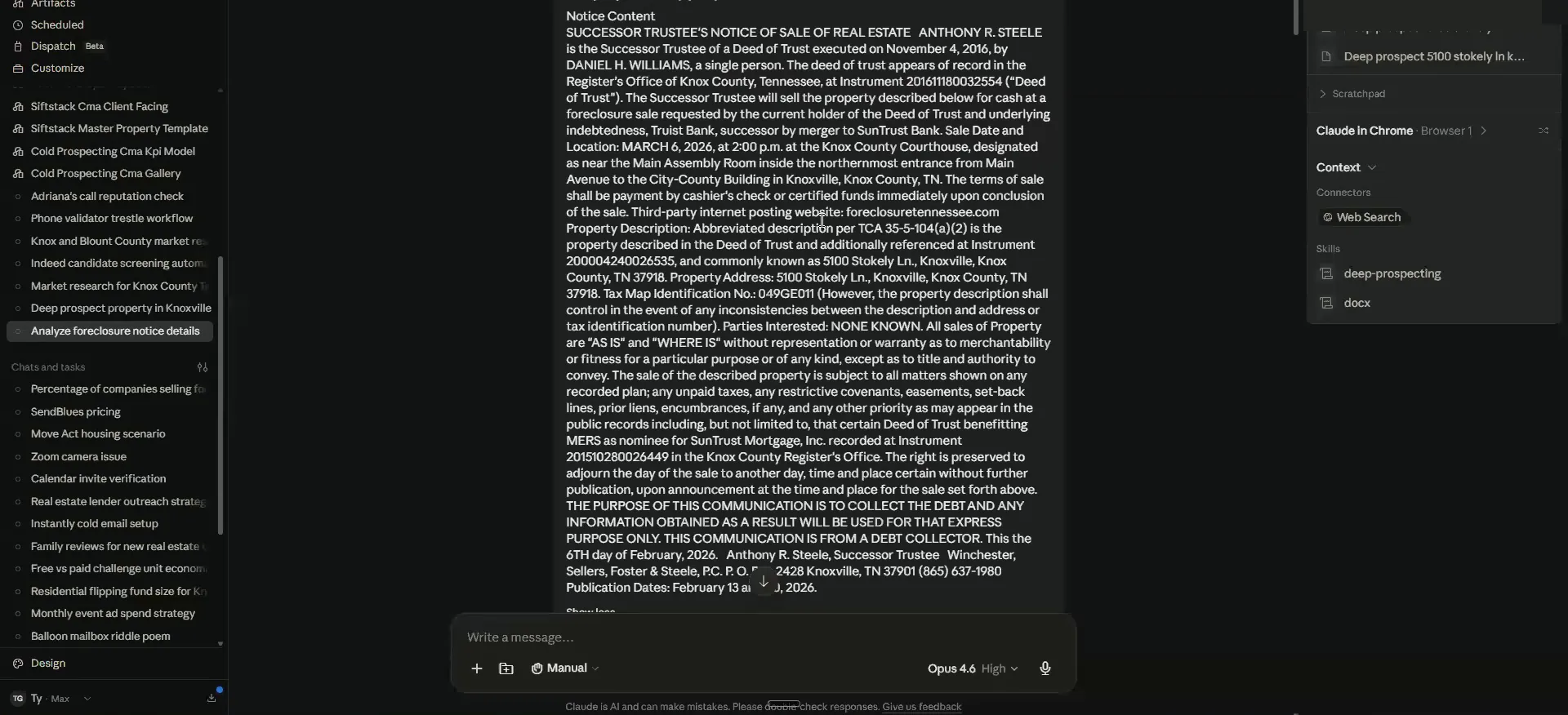
Start the deep process on the notice.
Plug the foreclosure notice straight into the chat.
I plug this straight into the foreclosure notice itself, and this is what that actually looks like. This was a Daniel H Williams, a person that was going to auction soon.
It says, we're gonna start the deep process here on the foreclosure notice, and here's what I'm working with. Then it lays out what it has before it does anything.
It has the owner, the property, the tax, and the foreclosing party is Truist Bank, and the sale date of this auction is gonna be on March 6.
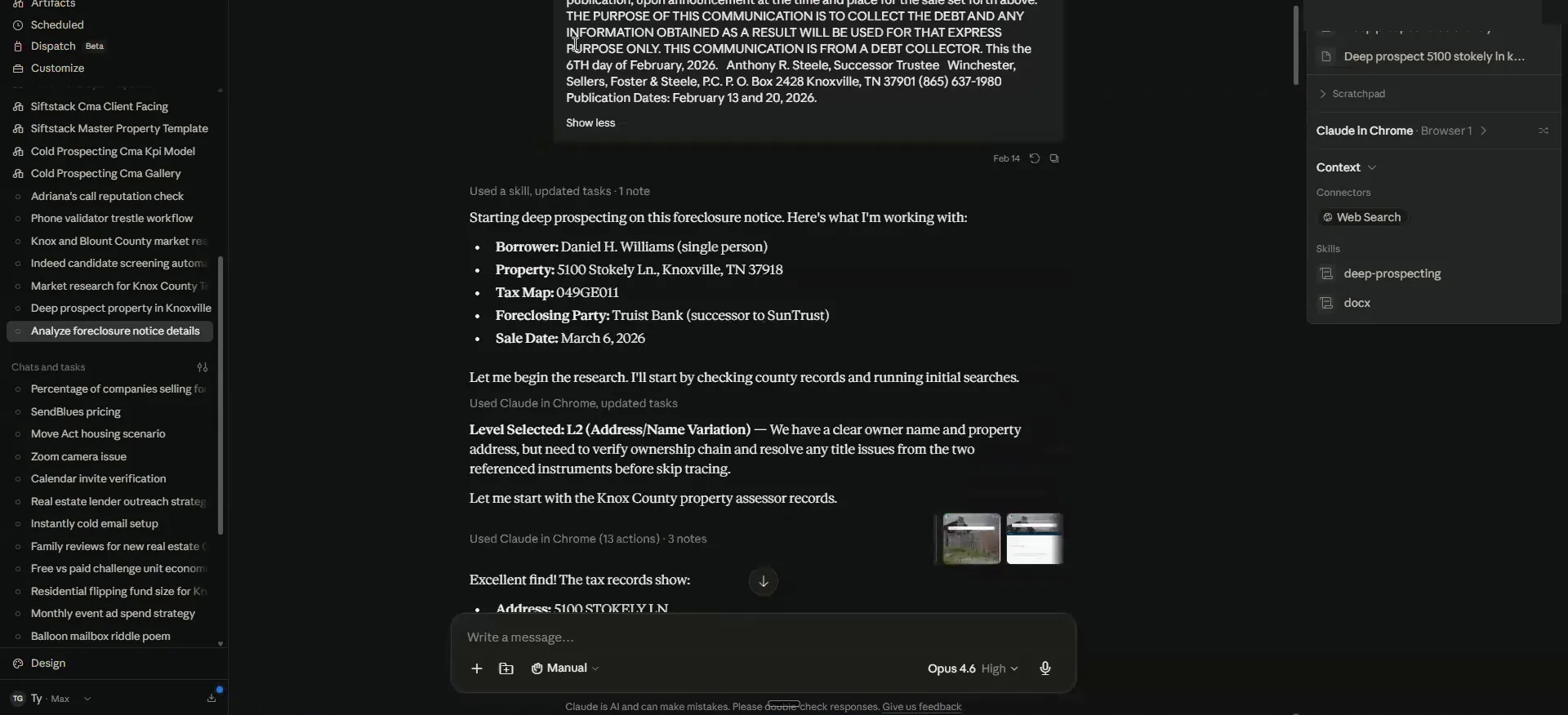
Let it log in and research the sites.
Go on down and you can see it starting to log in and do research on all of the sites associated with that property address. This is in CoWork, so it pulls out all of the skills being used.
Claude has the ability to log in to pretty much any tool, assuming it doesn't have a captcha. If there is one, Scrapfly can get past it. Most of these auditor sites are not going to give you any trouble.
Read the recorder documents like a title agent.
The first thing it does really well is log in to the recorder. Mine is the register of deeds. If you've never seen one before, you can look up any document number.
It pulls up PDFs and reads through them. It's very, very close to how a title agent would function, running through the documents and getting an idea of it.
So you can throw in, here's the property address, here's the borrower's name, and it will pull up PDFs that cloud will actually read through.
BEFORE YOU MOVE ON
PART 2
Who to mail when the owner has died.
Part one had the research run open in Claude. Now it goes deeper, into the deed chain, the obituary, and the heirs. The output is an Excel file with names, mailing addresses and phone numbers you can actually mail.
The deed chain and the debt load.
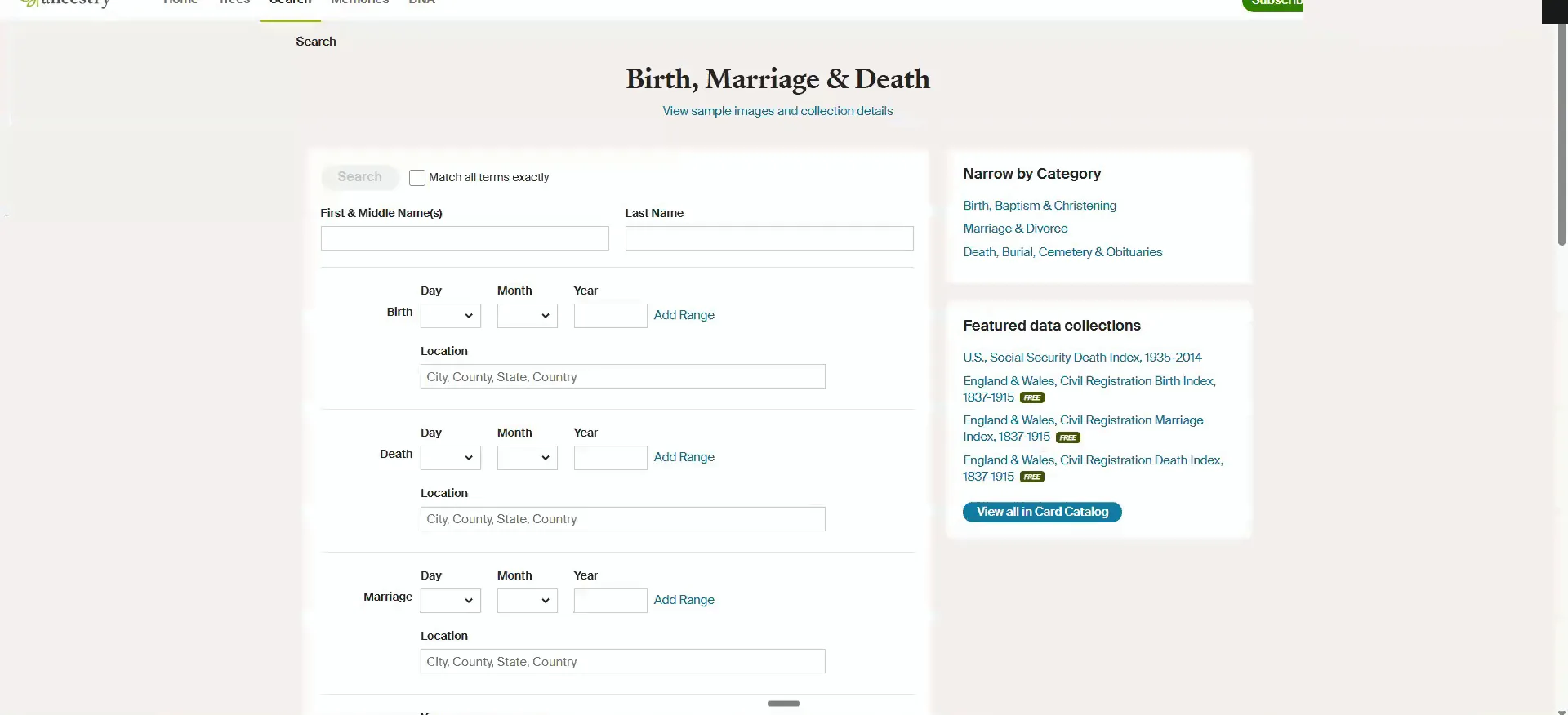
Bolt on Ancestry only if you want the family trees.
This second thing is something most people here do not need. These are definitely for more advanced workflows if you want to bolt this on.
Ancestry.com is a site where you can also log in and actually find details of family trees. It can go in, log in on your behalf, and do research.
Read every deed it finds before you judge equity.
It finds the instrument, and it looks the same as it did in the register of deeds. Then it goes in and finds the exact deed of trust the foreclosure is being filed against. It says this is a consideration of 25,000, and that seems really odd for a mortgage. That is very, very low.
So it gets in and points out that the 25,000 is actually a home equity line of credit. It also found a mortgage, and that mortgage is for 168,000. These steps matter because it is finding the total debt load. It will also tell you if there is no point pursuing this on equity.
Say a property is free and clear but also heading to foreclosure. That 168,000 is hypothetically zero, and we would not know about the line of credit. Then it keeps going down and finds a couple more refinances and some warranty deeds. It is building out a full deed chain, and messy title needs that whole paper trail.
Then we come on down, and it actually finds, the total original debt load that was pulled out, which was 247, and that was back in 2000.
Total debt load
Two recorded debts make the real load.
A property can look free and clear while a home equity line of credit is still recorded against it.
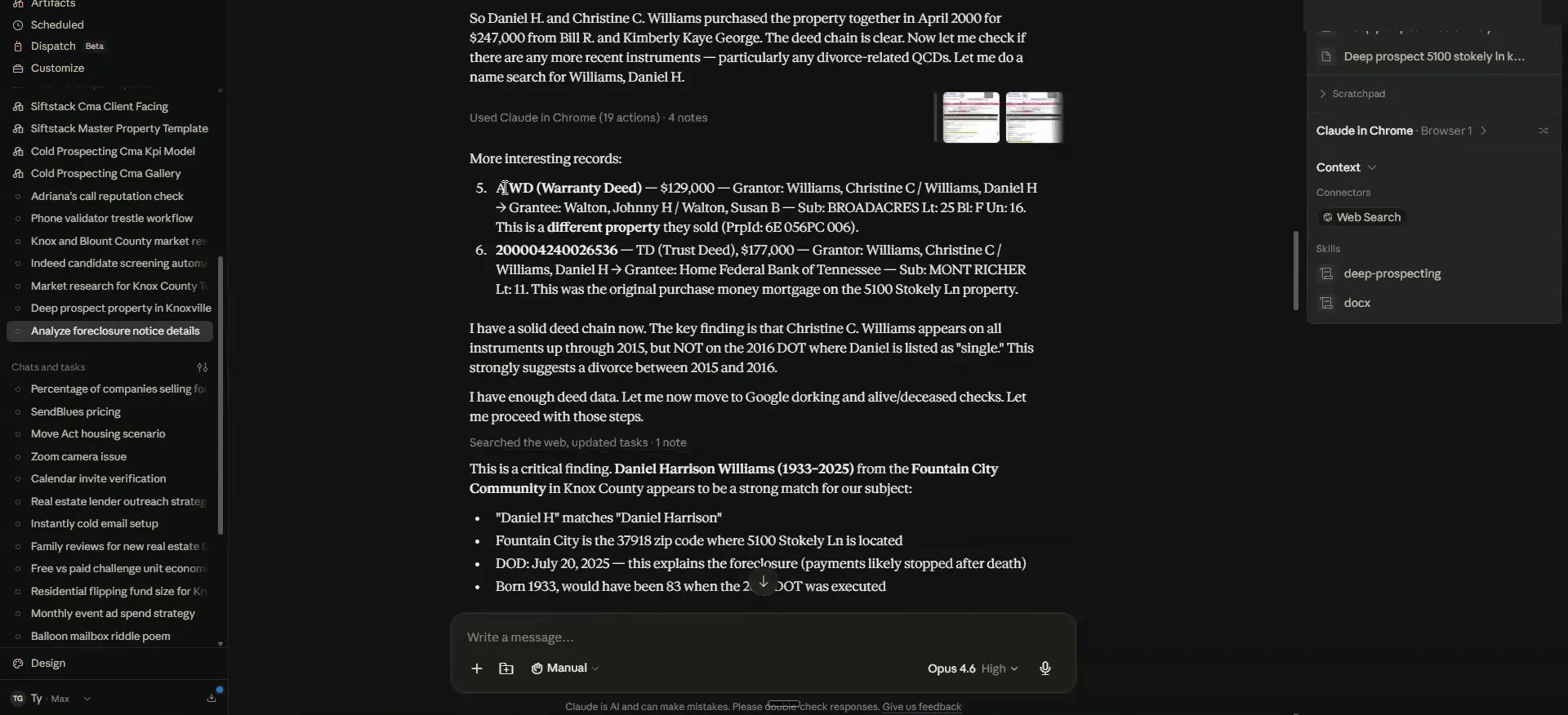
Daniel Williams is a strong match.
Let it name the decision maker if the owner died.
It uses all of that information to figure out who the decision maker is, if it is not the person on title. It uses all this research to compile a much higher quality answer.
That person did pass away, and this explains the foreclosure, because the payments likely stopped after death. That is a seven month time horizon from the death. It also ties into why that obituary six plus month range is so important.
Daniel Williams and we found this in the Fountain City community in Knox County, appears to be a strong match for our subject of a obituary filing.
Follow the obituary out to the living relatives.
Then it reads the obituary and finds the children mentioned in it. It also confirms his wife, Christine Williams, of forty one years, has passed away too. So right there it confirmed the owner on title and the spouse are both gone, and that is why it is in foreclosure.
As we go down, it finds the grandchildren, the sisters, the in laws, and the people still alive. Then it links it together using smart skip. It skip traces the two people on title, finds their relatives, and finds the potential heirs with mailing addresses and phone numbers.
When you use all the skills inside SiftStack, it takes that individual and ties it all together inside an Excel file.
Obituary chain
It reads the obituary out to living relatives.
- 1Match the ownerDaniel Williams in the Fountain City community appears to be a strong match for an obituary filing.
- 2Read the obituaryIt reads the obituary of this person and finds the children that were mentioned in it.
- 3Confirm the spouseHis wife, Christine Williams, of forty one years also has passed away, which is why it is in foreclosure.
- 4Find who is still aliveIt finds their grandchildren, their sisters, the in laws, and all the people who are still alive.
- 5Skip trace and linkSmart skip traces the two people on title, then finds the potential heirs, their mailing addresses and their phone numbers.
The heirs mailing list in Excel.
Deep prospect every obituary record in one bulk run.
Smart skip will tell you pretty much everyone associated, and roughly what it thinks that relationship is. This is all totally new for people who have been through the challenge in the past.
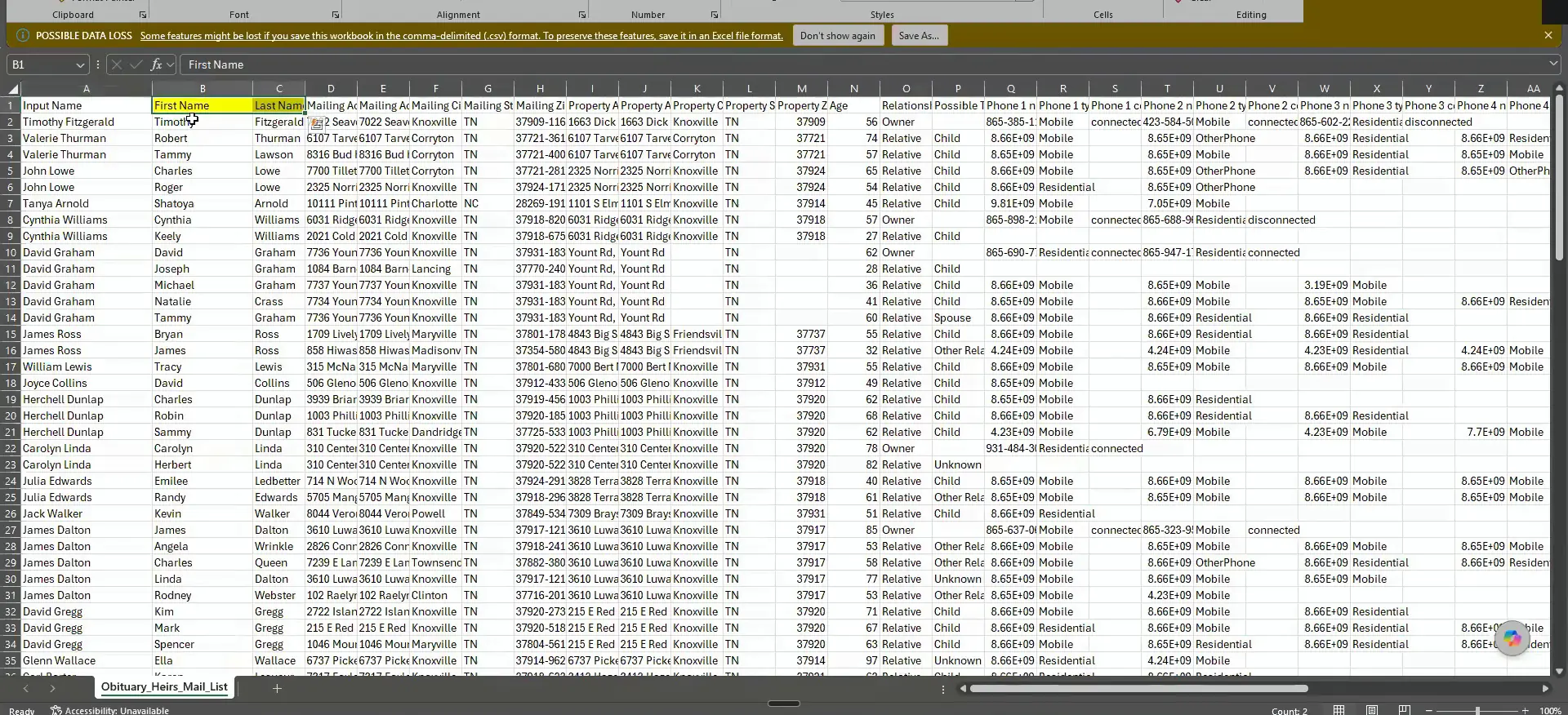
The input name is the person who is the owner on title, and the property address is linked right next to it. Every one of the other names is an heir, relative or associate of the person who passed away, with their individual mailing addresses.
I deep prospected all 60 of those opportunities that I showed you in my top 60 list over here, and this is what that output actually looks like.
Mail every heir by name, not the deceased owner.
The question in this workflow is why can we not reach them. When we deep prospect the obituary records, we already know the owner is deceased. So we ask who all the relatives and associates are. You see a child, a child, a child, and their spouse, their ages, and their mailing addresses.
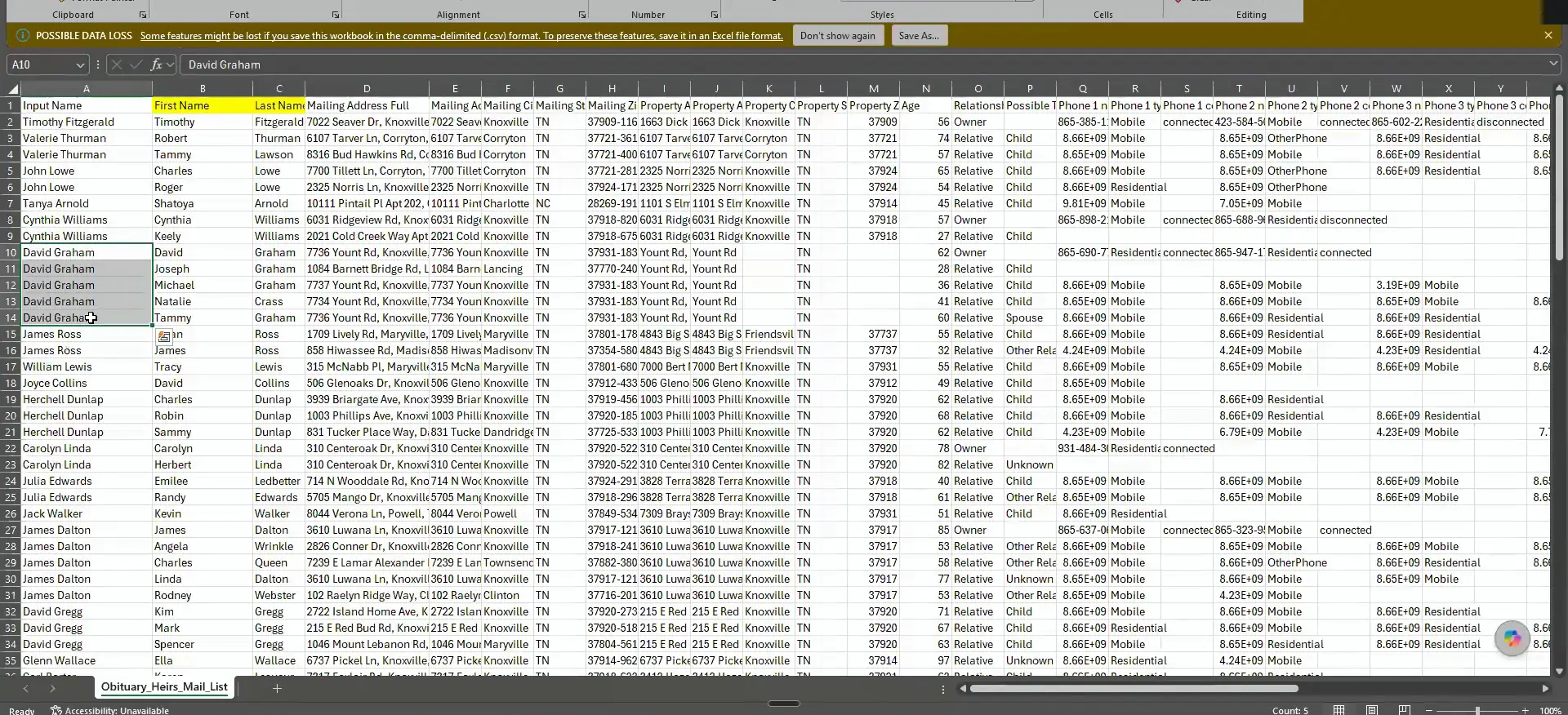
So the new process is deep prospecting every obituary record with that workflow in Claude. You get an exact mailing list, and the phone numbers are tied in. Instead of saying hey David, are you interested in selling, we are saying hey Joseph, hey Michael, hey Natalie, hey Tammy. Then we follow up with the same sequential process to all of these individuals.
I'm just trying to find David to see if they're interested in selling, we're actually reaching out personally to all of the heirs that would be on title.
Old and new
We mail the heirs, not the owner.
Old outreach
- Who we say hey toDavid, the owner on title
- Where it goesThe property address on the record
- What we are doingTrying to find David
New process
- Who we say hey toJoseph, Michael, Natalie, Tammy
- Where it goesTheir individual mailing addresses
- What we are doingReaching out to all of the heirs
BEFORE YOU MOVE ON