
PART 1
Data turnover and full attempts.
Every list you pull changes under you every month. Some of it sells, some of it drops off, and new records join. This Part covers how fast that happens and how many full attempts it takes to get a deal out of it.
What turnover actually means.
Know how fast your list changes every month.
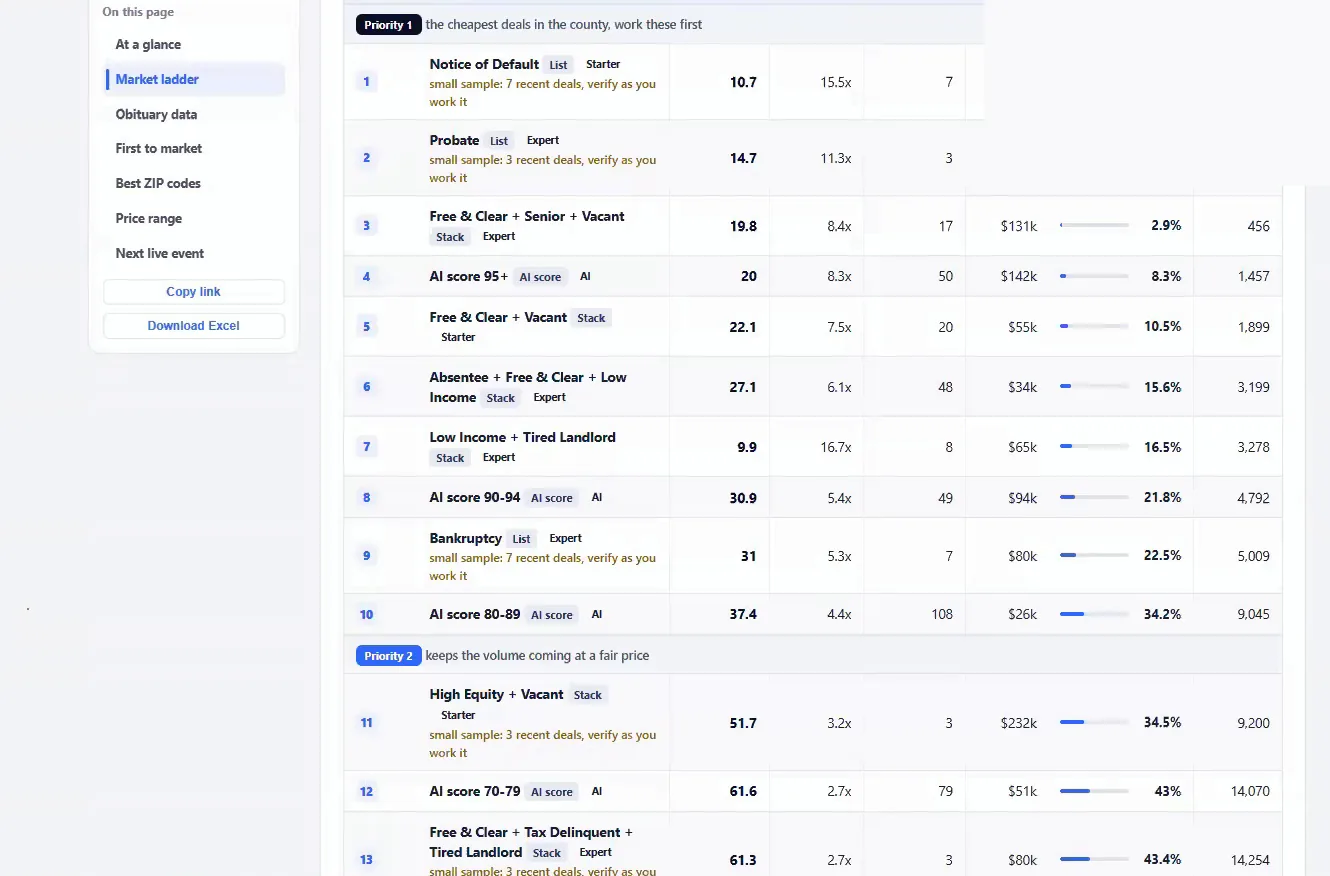
The best way to describe this is if we have a list of a thousand people. Throughout that thousand record list, we have maybe 10% that change every month. That comes from sold transactions, people dropping off because the foreclosure cleared, or new people joining the list.
Different lists have different rates of turnover. Auction lists are a good example of a fast one. Every six months you pretty much see that entire list be a totally new thing, because either they went to auction or they didn't. More than likely, about half of those actually end up selling.
A list with lower turnover that is still good is senior homeowners with high equity. Those are usually longer sales cycles and things like that. So the same list size does not mean the same amount of new work each month.
So the really, really good distressors, they have a massive turnover.
Five to 15% is new every month.
Plan for five to 15% new records monthly.
On your doors per deal you have fourteen fifty seven records. The question was whether that is the average for every six months. What I am finding is that about five to 15% of that data turns over every month.
Use nice round math. Say it is a thousand records on a list. When I say turnover of 10%, you are going to get a new 100 records. So whatever your list size is, some of it is new every single month.
Turnover paired with the not interested campaigns is why one person eventually will probably tap out if they are working, 2,000 records in total.
Turnover math
Ten percent turnover on a thousand records.
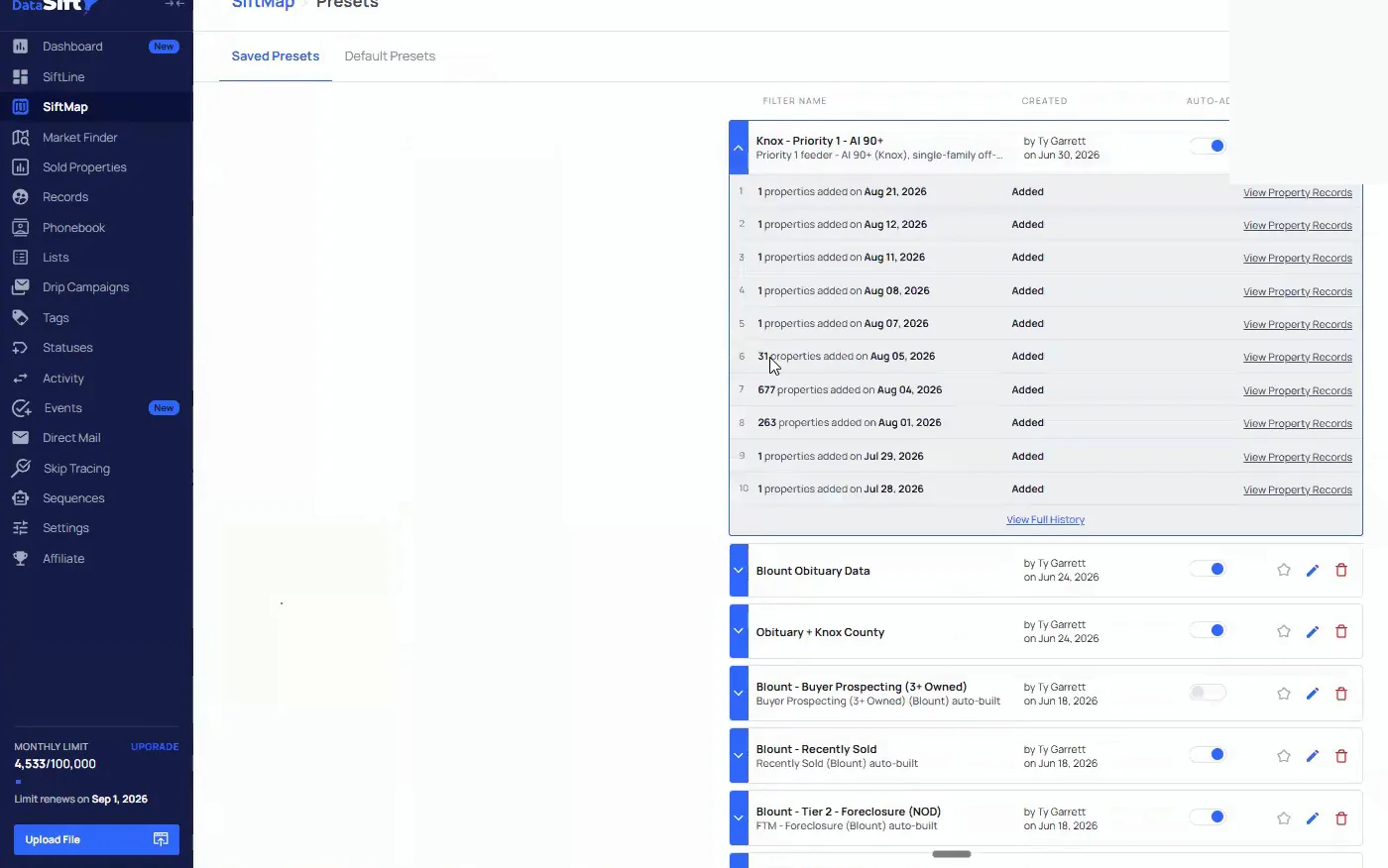
Open your preset in Sift and read the dates.
From a visual aid perspective, go to the Sift app, come over to presets, and load my AI score of 90 plus. That page is a representation of the turnover.
On August 4 and August 1, that is when a lot of the machine learning models update. You can see the properties that hit the account on those dates.
When you start doing this month over month, you have a consistent pipeline being added to. And you are the first ones to market to them, all at once, on your cold calls.
So just on my AI score of 90 plus, 677 plus two sixty three is how many new properties hit my account.
Most deals come on the third attempt.
Keep marketing when you get no early traction.
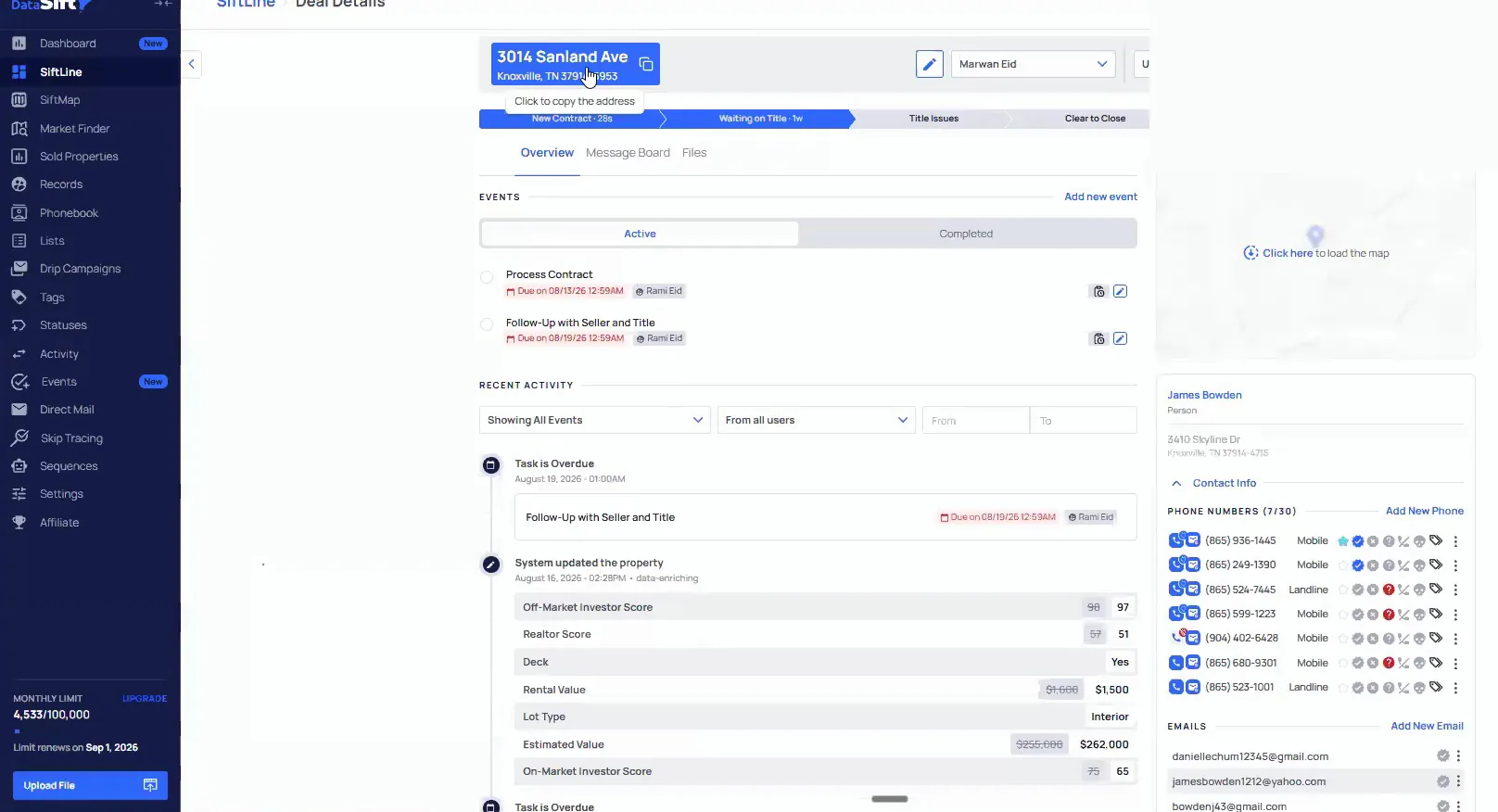
I should have harped on this more than I did. Both Old State and Sanland, those two deals I showed you guys yesterday, took three full attempts and four full marketing attempts. Look how many messages she sent before that one finally came through.
A lot of this gets filtered out, and it takes a lot of touches to convert these people. So if you don't get a lot of initial traction, just keep going through it.
You hear the buzzword stuff about deal volume and follow up. That is all on the sales side, but I feel pretty strongly it is also on the marketing side.
And the reason I think they don't talk about it is they don't teach, tracking all of this on the front end of the marketing side.
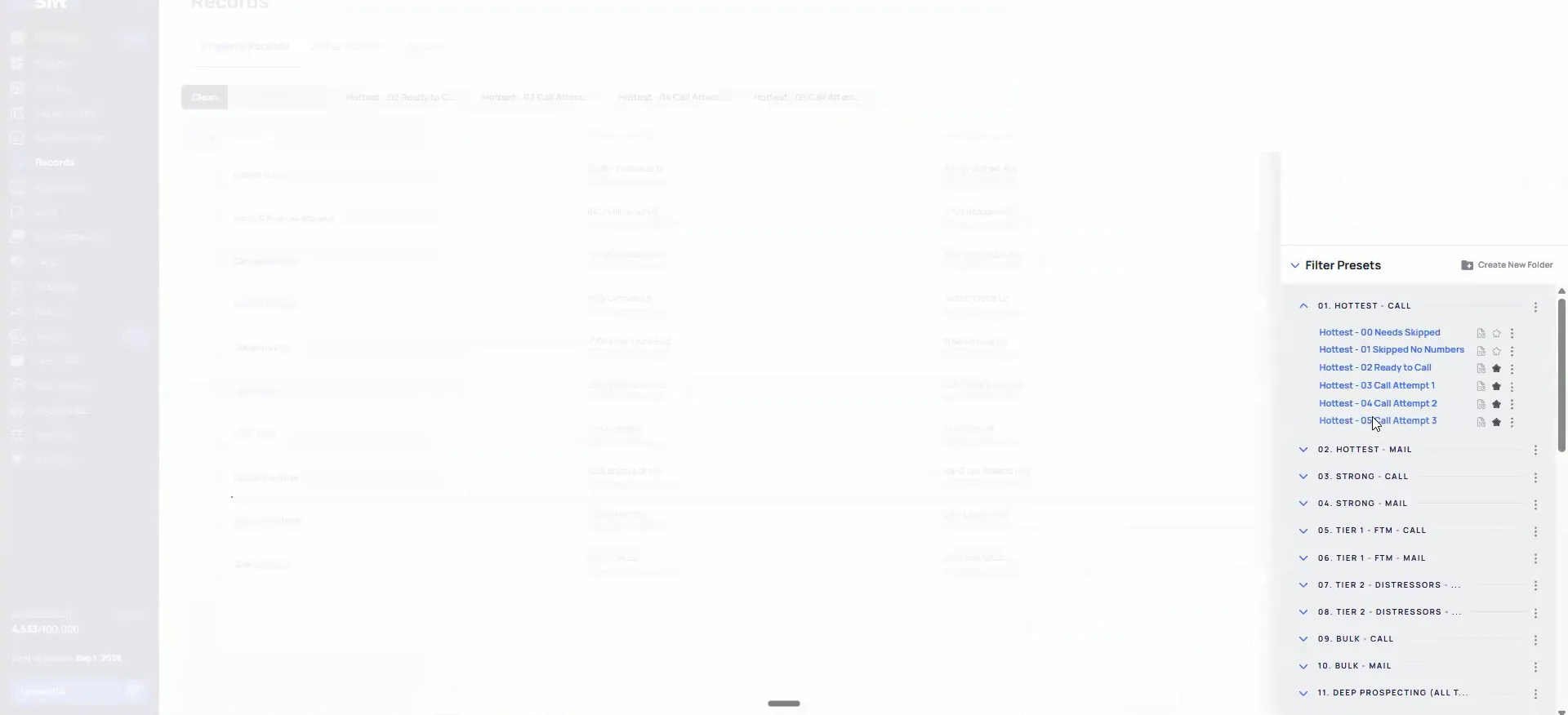
Load the hottest preset and read the attempt tiers.
Go into your record presets, hit load, and focus just on the hottest. Most of the deals are coming right there on the third full attempt. There is probably going to be a handful further down as well.
No contact and new lead, that is not good, but you get the idea. All these full attempts stack up and they all look a little bit similar to each other.
We were getting asked what lead volume should be, and a lot of them come on the back end. That is what we are referring to. I do think there is probably a path to having more attempts, I just haven't tested them enough yet to know for sure.
Full attempts
Both deals took three or four attempts.
BEFORE YOU MOVE ON